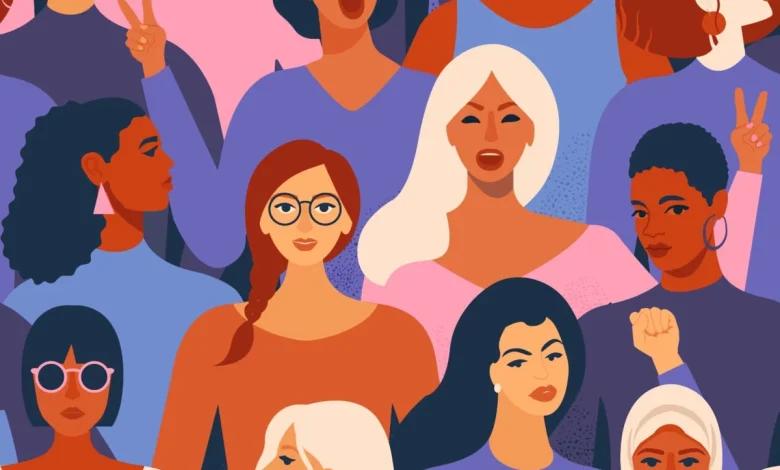
March 8 at 9: 00 a. m. ET — Seven women have given first-person accounts of the small and large struggles they face each day in a feature marking the journée internationale des femmes. The piece surfaces now because the narratives coincide with the recent inscription of the IVG in the Constitution and the public attention that brings to women’s rights.
A mother’s legal and emotional fight in France
One contributor describes being separated for eight years and divorced for six, a single mother of two teenage daughters, and currently facing a legal challenge from her ex-husband seeking full custody of the elder child and shared custody of the younger. She frames her daily struggle as psychological: wrestling with shame, guilt and the fear of not being seen as a good parent while trying to preserve relationships with her daughters amid intense legal conflict.
Journée Internationale Des Femmes and the spotlight on reproductive rights
The feature explicitly connects personal stories to larger political moments, noting that the inscription of the IVG in the Constitution has given added urgency to conversation around equality this March 8. In this journée internationale des femmes coverage, contributors ask whether legal gains like constitutional recognition of abortion are matched by progress on economic, social and cultural inequalities and the private psychological battles many women still endure.
Origins of the movement since 1909 and the 1982 moment with Yvette Roudy
The narrative situates this iteration of the observance within a historical arc: the movement began in 1909 in the United States and reached France in 1982 with the initiative of Yvette Roudy, then the minister delegated to women’s rights. That history is used in the piece to both celebrate victories and to underscore continuing gaps between legal milestones and everyday experience.
An 86-year-old Parisian contributor recalls a strict upbringing in which cafés were not considered appropriate places for women and harsh insults policed female behavior; she frames the present acceleration of social change as mixed, welcoming legal advances while noting lingering cultural codes. She identifies liberty as the most beautiful word in French and positions herself as a bridge between generations, hoping to pass on experience to younger women.
Another voice in the feature, approaching 30, begins to recognize time lost to social constraints and personal compromises; that reflection is presented alongside the other testimonies to highlight how different ages and stages produce distinct invisible battles. Contributors collectively ask how legal wins translate into everyday freedom and equality across generations.
Across these accounts, contributors name specific arenas of struggle: family law and custody disputes, cultural norms and intergenerational transmission of expectations, and internal psychological battles about worth and motherhood. Each testimony illustrates a facet of inequality that persists despite visible policy moves.
For now, the feature uses March 8 and the renewed focus on IVG as a moment to amplify these personal stories, stressing that legal inscription alone does not erase daily discrimination or the emotional labor many women shoulder. The collection asks readers to consider both public victories and the private work that must follow.
More details expected 5: 00 p. m. ET.