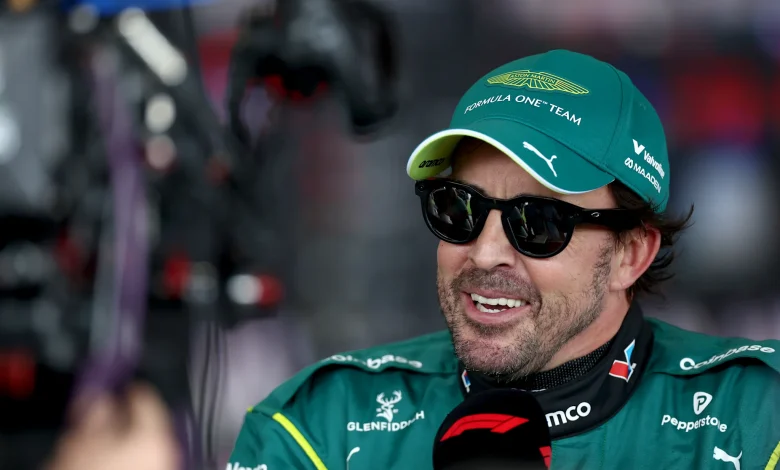
Aston Martin drivers Fernando Alonso and Lance Stroll could suffer permanent nerve damage and the team risks missing the 58-lap Australian Grand Prix, a crisis driven by Honda engine vibrations and dwindling battery spares, Filmogaz reporter Bernie Collins says. Saturday at 5: 05 p. m. ET, countermeasures and limited running shaped the team’s outlook.
Fernando Alonso and Lance Stroll face nerve-damage risk after Honda vibrations
Two Aston Martin drivers are directly affected: Fernando Alonso and Lance Stroll, who were warned that extreme vibrations from Honda’s power unit could transmit into the chassis and pose a risk of permanent nerve damage. Team leadership described the vibrations as severe enough that countermeasures were necessary just to rack up track mileage, and the possibility that neither car will take part in the weekend’s racing was explicitly raised.
Bernie Collins: battery shortfall and part shortages threaten Aston Martin’s weekend
Aston Martin arrived at the Australian Grand Prix with a critical shortage of battery spares for Honda’s hybrid system. The team was down to its last two working batteries and then lost additional units after a fresh communication issue, leaving just one battery per car for the remainder of the weekend. Team boss Adrian Newey said there are no spare batteries available from Honda’s factory in Japan, and one more battery failure in final practice, qualifying or the race would prevent that car from taking any further part in the weekend.
Fernando Alonso’s P17 qualifying and Lance Stroll’s missed session underline limited running
On the performance side, Fernando Alonso qualified P17 with a provisional Q2 lap of 1m 21. 969s before being bumped down, showing progress after hampered running in pre-season testing and practice. Lance Stroll, by contrast, missed qualifying after a suspected Internal Combustion Engine issue in FP3 left the team unable to rebuild his car in time. Alonso had been ruled out of FP1 by a suspected power unit issue but recovered mileage in FP2 and FP3; the reduced on-track time was cited as harming set-up work and reliability.
Still, Honda engineered a countermeasure on its dynamometer in Japan intended to protect the battery from the vibration problem. An attempt to run that fix in first practice was disrupted by a separate issue, but second practice produced usable data: Lance Stroll and Fernando Alonso completed a combined 31 laps that allowed the team to determine the items implemented on the dyno were working at the track.
Pre-season testing in Barcelona and Bahrain and the practice sessions at Albert Park were already marked by limited running for Aston Martin, which the team says cost them meaningful development time. Alonso said the team gained about two seconds on lap time simply by being able to run more and refine the set-up from FP2 through qualifying, an improvement he tied directly to increased track mileage rather than major car changes.
That limited parts inventory also factors into race strategy: Alonso noted the team is short on parts and must preserve components for the next event in China, meaning that at the first sign of further trouble the cars may be kept off track to ensure availability for the following race.
If Honda’s countermeasure holds through final practice and qualifying, Aston Martin could attempt to start the 58-lap Australian Grand Prix; more details expected Saturday at 5: 05 p. m. ET.