Friday at 10: 00 a. m. ET: press and viewers now face pressure to stop reducing nicola coughlan’s work to her body after she told Elle she has “no interest” in body positivity. The change follows her account of a fan approaching her in a bathroom to discuss only her appearance.
Nicola Coughlan forces conversation toward performance over physique
The most immediate effect is a narrower public script: attention that centered on measurements and labels must refocus on roles and craft. Coughlan said she had lost “a bunch of weight” while preparing for the period drama and was “probably a size 10, ” and that one corset she wore was a size 8 — details she offered to stress how odd it felt to still be described as “plus-size. ” Those specifics deepen her argument that commentary about bodies is distracting from months-long acting commitments.
Elle interview and bathroom encounter expose persistent fan focus
Her interview with Elle, published in early March, revealed a vivid example: a fan told her in a bathroom, “I loved [Bridgerton] because of your body, ” and Coughlan said the encounter made her want to disappear. That anecdote underscores a secondary consequence — public interactions and fan conversations are likely to be scrutinized more closely now, and personal encounters that reduce performers to appearance risk being called out by colleagues and commentators.
Luke Newton scenes and Coughlan’s other work sharpen the call to change coverage
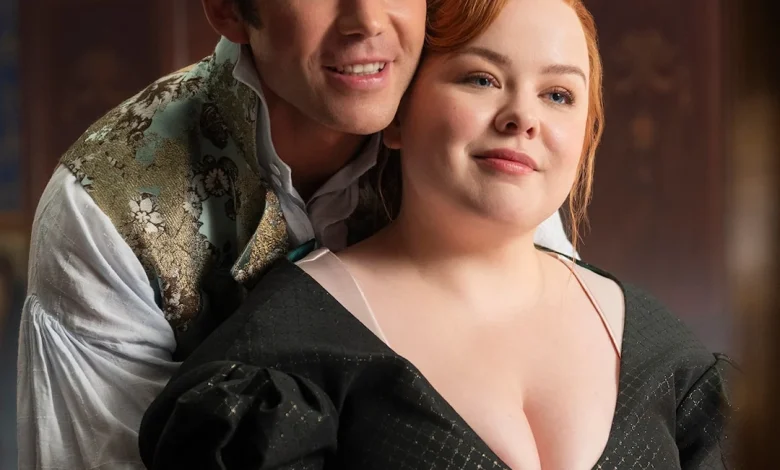
Those who promote and cover the period drama must also reckon with how intimate scenes are framed: Coughlan described sex scenes with costar Luke Newton as one context where commentary returned to her body rather than the performance. For many readers and editors, the conversation will shift further because Coughlan is not only known for that drama; she first broke out in Derry Girls and has engaged in fundraising and advocacy. She was named one of Time’s Next Generation Leaders and helped raise more than $2 million for a children’s relief fund, facts that presenters and reporters can foreground instead of physical descriptions.
Still, the practical change in coverage will depend on a few immediate choices by publicists, interviewers and outlets: whether future interviews highlight Coughlan’s craft, her charitable work and upcoming projects, or whether they continue to lead with body-focused angles. For now, she has made a clear request that the conversation move elsewhere.
If future publicity for her upcoming season of Big Mood and the adaptation of The Magic Faraway Tree centers on performances and projects, press attention should shift toward those topics within weeks. More details about promotional schedules are expected as those projects approach release windows.