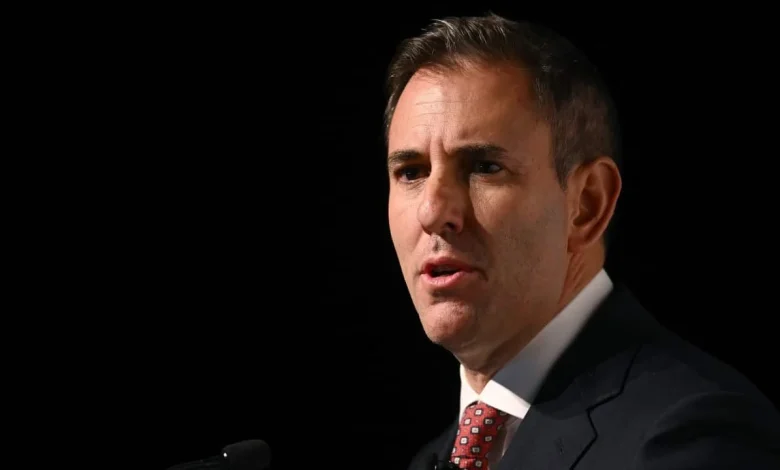
Treasurer Jim Chalmers said a recession is “not something that we’re anticipating or expecting” for Australia even as federal modelling shows inflation could peak in the high fours and market expectations have moved toward a March interest-rate increase.
Recession Not Expected, Treasurer Emphasises Caution
Chalmers told broadcasters Treasury had modelled a number of scenarios for the economic impact of the Middle East war and expected a hit to growth, but not “the kind of dramatic contraction” that would constitute an economic crash. He said the most extraordinary volatility in forecasts stems from how long the conflict drags out.
Inflation Pressure From Oil, Modelling Shows Peak In High Fours
Federal modelling cited by the Treasurer indicates inflation might peak in the mid to high fours, driven in part by disruptions to oil passage through the Strait of Hormuz and images of tankers ablaze in the Persian Gulf. Analysts warned benchmark oil prices could soon exceed US$150 a barrel and further push inflation away from the Reserve Bank’s two to three per cent target band. Inflation was noted at 3. 8 per cent.
Markets Shift Toward a March Hike; Reserve Bank Timing Remains Key
Until recently, the Reserve Bank was widely expected to keep interest rates on hold at its March board meeting on Tuesday. The escalation of the Middle East conflict changed that outlook: market expectations for an interest-rate increase moved from about a one in 10 chance to roughly a two-thirds expectation. The situation could change entirely between the bank entering its lock-up on Monday morning and its cash rate announcement at 2: 30 pm ET on Tuesday.
Reserve Bank deputy governor Andrew Hauser signalled greater concern about elevated inflation than growth in a recent podcast interview, a stance that market analysts interpreted as guidance that a March hike is more likely than not. HSBC’s chief economist Paul Bloxham noted the market has taken that interview as such guidance. Chalmers conceded that market expectations have shifted but maintained the government’s view that a recession is not expected.
The Treasurer also highlighted uncertainty from broader geopolitical dynamics, noting that the war’s duration is the central variable affecting forecasts. He acknowledged it is unclear how recent rate moves have affected consumers and how long disruptions at the Strait of Hormuz will last. He also observed that unpredictable international leadership complicates forecasting, saying the unpredictability of the US President makes forecasting “a mug’s game. ”
With inflationary risks elevated and market pricing tilted toward a rate rise, officials and markets alike will watch developments in the Middle East closely in the run-up to the Reserve Bank’s decision.