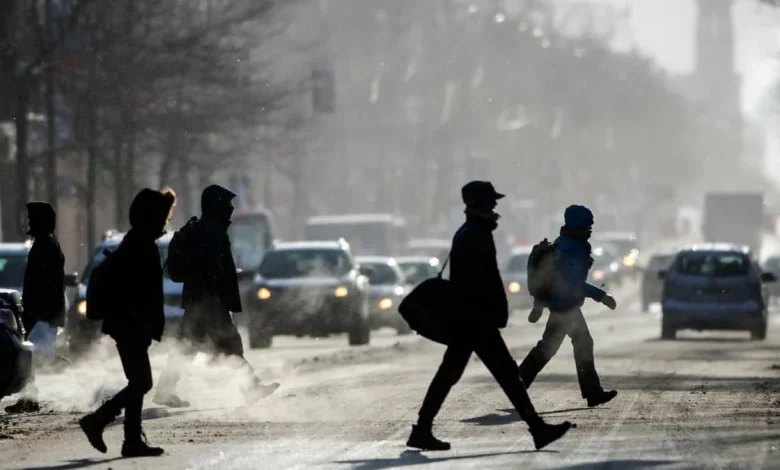
Tuesday at 9: 00 p. m. ET, residents in southern Quebec face widespread travel disruptions and possible power and service outages as Verglas Québec — a freezing-rain event tracked by Environnement Canada — moves in, with forecasters warning certain areas could receive heavy accumulations of freezing rain and prolonged icy conditions.
Environnement Canada warns southern communities of prolonged icing and service risks
Environnement Canada has issued a special weather bulletin that places much of southern Quebec on alert for freezing rain beginning Tuesday, with precipitation expected to start as rain during the day before changing over to ice. The bulletin highlights the risk that icing could last up to 24 hours in affected zones, a duration that forecasters say could paralyze several services and make roads treacherous.
Verglas Québec threat centers: Grand Montréal, Montérégie, Outaouais and the Laurentides
Forecasters cite a possible total of 20 to 30 millimeters of freezing-rain accumulation for Grand Montréal, Montérégie, Outaouais, the Laurentides, Lanaudière, the Mauricie, Centre-du-Québec and the Capitale-Nationale. That level of freezing precipitation would coat roadways, sidewalks and overhead lines, increasing the likelihood of outages and forcing authorities to restrict travel in some municipalities.
Saguenay–Lac-Saint-Jean, Rimouski and Gaspésie expected to see heavy snow and blowing wind
While the south contends with ice, Saguenay–Lac-Saint-Jean, Rimouski and the Gaspésie are forecast to receive significant snowfall beginning Wednesday, with gusty winds Wednesday and Thursday likely to create blowing snow and rapidly deteriorating visibility. In zones where freezing rain gives way to snow overnight Wednesday into Thursday, road conditions are expected to remain hazardous as temperatures fall.
For context on recent precipitation patterns, meteorological reports show February was unusually dry across the province: Montréal received 0. 2 mm of rain compared with a normal of 16. 9 mm, and most regions recorded far fewer snow events than typical, with the Gaspésie the lone area to see near-10 cm accumulations over several days. Still, forecasters emphasize that March will bring multiple systems and above-normal precipitation during the first two weeks, increasing the chance of mixed winter precipitation events.
Preparations already advised by officials include expecting transitions from rain to freezing rain and then to snow in some sectors, and planning for high-impact conditions on roads and public services. Emergency and transport officials in affected regions are being told to brace for extended response operations and potential service interruptions as the system moves through.
If the center of the depression shifts or a new bulletin alters the forecast, impacts are expected to change; more details expected Tuesday evening at 9: 00 p. m. ET.