UN Resolution Advances, Tightening Climate Duties Under International Court Of Justice Opinion

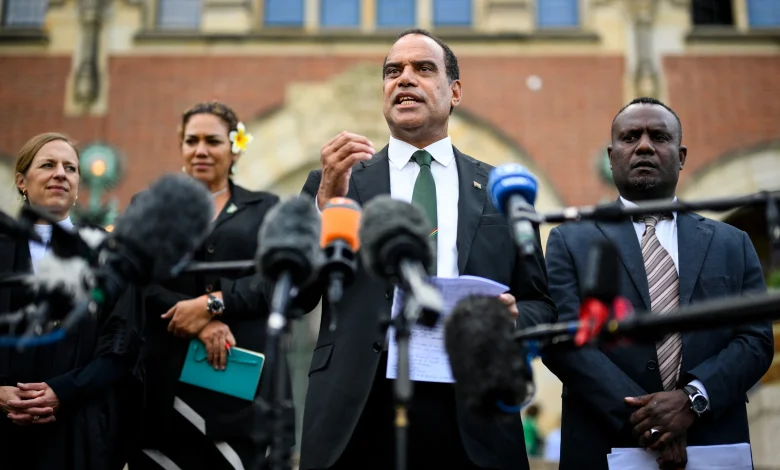
Countries now face sharper scrutiny over how their climate policies match legal obligations if a narrowed United Nations measure proceeds to a vote later this month, shaping how governments defend fossil-fuel expansion. As of Saturday at 2: 56 p. m. ET, Vanuatu said it is still pushing the effort tied to the international court of justice ruling despite U. S. resistance.
Vanuatu’s Draft Narrows, But Targets 1. 5C Phase-Out Remain
The immediate change is a slimmer proposal: Vanuatu removed sections of its draft that would have created a registry of climate “loss and damage, ” after the United States demanded the entire resolution be dropped. Even pared back, the text still urges countries to “comply fully” with climate-related legal obligations and to restrain warming to 1. 5C through a “rapid, just and quantified” phase-out of fossil fuel production and use. A vote at the UN later this month remains the goal, Vanuatu’s climate minister Ralph Regenvanu said.
Opposition from major producers including the U. S., Saudi Arabia and Russia has already watered down the measure. A State Department cable last month argued the non-binding resolution could pose “a major threat to U. S. industry, ” and relayed President Trump’s view that global bodies have exaggerated climate risk. Regenvanu called Washington’s pressure “disappointing, ” while insisting core language on the fossil-fuel phase-out stay intact to reflect countries’ existing legal duties.
International Court Of Justice Opinion Raises Compliance Stakes
The resolution explicitly leans on the July 2025 climate advisory opinion from the international court of justice, which frames climate commitments as legal requirements rather than political suggestions. The original request for that opinion passed the UN General Assembly unanimously, and backers now say codifying its implications would strengthen accountability across existing treaties and norms.
Diplomatically, the coalition behind Vanuatu has widened the circle. More than 100 countries engaged in negotiations on the text in the past week, and proponents are aiming to enlist 150 supporters. Supporters include the Netherlands, Colombia, Barbados, Kenya, Jamaica and the Philippines. Advocates argue that aligning national plans with the court’s interpretation would give vulnerable communities clearer grounds to press for action when policies fall short.
Mary Robinson, the former president of Ireland, said endorsing the court’s opinion would signal continued faith in a rules-based system and credited Pacific island youth activists with initiating the legal push. She cautioned that powerful countries are pressing smaller states to dilute the follow-up resolution, a concern echoed by Vanuatu, which said the European Union has been less helpful than expected.
U. S., Russia and Saudi Arabia Push Back as Vote Nears
Vanuatu, an archipelago that says it faces existential threats from climate impacts despite its minimal role in causing them, has led the resolution while navigating resistance from heavyweight producers. Regenvanu said the U. S. asked that the measure be withdrawn outright. Instead, Vanuatu trimmed the draft and kept its core premise: that governments must meet climate obligations in line with international law and move off fossil fuels fast enough to hit 1. 5C.
The divide is clear. Pacific island nations and allied supporters seek a firmer legal frame for accountability, while fossil fuel states have blocked language that could imply financial liability or an enforceable mandate to phase out oil and gas. The U. S., the world’s second-largest carbon emitter, has long feared legal exposure over pollution and argued the resolution threatens domestic industry, even as it remains non-binding. That stance, alongside similar pushback from Russia and Saudi Arabia, helped strip out the proposed UN “loss and damage” registry from earlier drafts.
Still, the remaining text would change the tone of future debates. By anchoring expectations to the international court of justice advisory opinion and by naming a “rapid, just and quantified” fossil-fuel phase-out, the resolution gives diplomats and advocates a concrete benchmark to assess national plans. That would make it harder for governments to defend new fossil projects without addressing how they align with 1. 5C and with obligations under international law.
Coalition-building will determine how far that shift goes. Vanuatu is not alone: the Netherlands, Colombia, Barbados, Kenya, Jamaica and the Philippines are among countries backing the initiative. Even so, Regenvanu said opposition to the measure has been more effective than support so far, and noted that expected allies inside the European Union have not provided the level of help Vanuatu anticipated.
The next test is procedural as much as political. If the final draft that reaches the floor still cites full compliance with climate obligations and a quantified fossil phase-out, governments will enter subsequent UN discussions with clearer legal yardsticks. If that phrasing is softened further, the resolution’s practical effect will narrow to signaling intent rather than recalibrating expectations.
The decisive moment is a UN General Assembly vote later this month, time unconfirmed as of 2: 56 p. m. ET. If the phase-out language survives intact and a broad majority signs on, backers say they could reach about 150 supporters, positioning the resolution to accelerate pressure on national plans through the rest of the year.