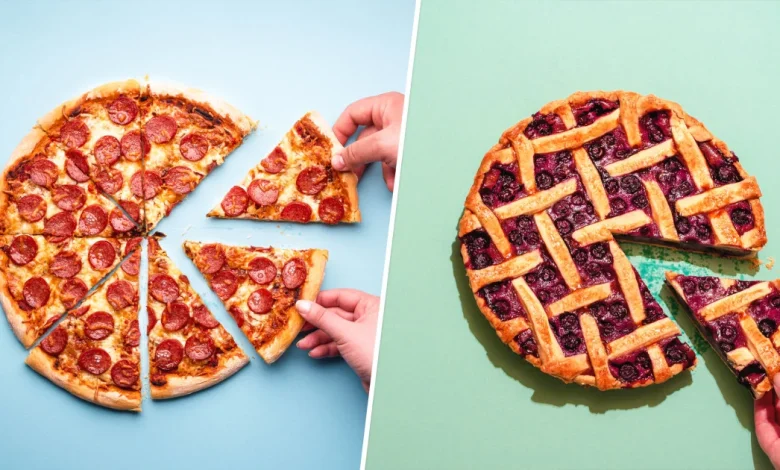
Pi Day 2026 arrives on March 14 as eateries roll out discounts and freebies while museums and researchers use the holiday to highlight the mathematical constant’s real-world applications. Pi Day 2026 is being observed with promotions that range from $3. 14 menu items to buy-one-get-one offers, alongside traditions that mark the number’s cultural and scientific reach.
Pi Day 2026: National Deals, Freebies and Where to Look
Retailers and restaurants are offering a wide array of Pi Day promotions. Several pizza chains and national food brands have curated special pricing tied to 3. 14, including a buy-one-get-one offer on 11-inch pizzas that drops the second pie to $3. 14 and standalone $3. 14 pies when customers purchase another item and use promotional codes. Members of a fast-food loyalty program can claim a free dessert pie with a $3. 14 purchase placed through that chain’s app or website on March 14.
Other promotions include discounted personal pizzas when shoppers use holiday promo codes, a limited-time mix-and-match menu offering value-priced items through restaurant apps, and grocery and delivery platforms featuring discounted frozen pie products or complimentary items while supplies last. Brand giveaways and social-media prize contests aiming to celebrate the digits of pi are also part of the mix.
These offers underline that the holiday has become both a consumer promotion opportunity and a moment for light-hearted celebration tied to the number 3. 14.
From Exploratorium Parade to Spaceflight Calculations
The celebration of pi has roots in museum outreach and public events. The holiday was created in 1988 by Larry Shaw at a science museum where early staff festivities centered on pie evolved into a public procession. Attendees traditionally march around a pi memorial, sometimes carrying digits in a playful parade, and the on-site program begins at 1: 59 pm ET to signify the next three digits of the constant.
Beyond pies and parades, the number plays a role in advanced science. In mechanical and aerospace engineering work, pi appears across formulas used for spacecraft motion, material behavior and propulsion systems. Calculations for antenna design and for interpreting complex signals beamed back from distant probes also involve pi; engineers must compute orbital positions and break down incoming waveforms in ways that bring the constant into daily use.
Examples from deep-space missions underline those technical demands: probes launched decades ago required precise calculations tied to orbital mechanics, and years later crossed thresholds described as interstellar — milestones that depended on lengthy navigational and communication computations.
Why Pi Still Matters in Research and Public Outreach
Researchers stress that pi is not merely a classroom formula but a foundational element in fields that analyze cyclical behavior, waves and round geometries. One engineering professor called pi part of “literally every single formula that you would use to do any calculation” in certain fields, while another researcher noted that decomposing unknown signals into simpler functions naturally produces instances of the constant.
Public-facing celebrations tied to Pi Day serve dual purposes: they provide an accessible entry point for people to engage with mathematical ideas and give scientists and museums an annual moment to underscore the constant’s practical significance. The holiday’s mix of retail promotions and educational programming reflects both commercial interest and longstanding efforts to invite broader audiences into the joy of mathematical learning.
As March 14 unfolds, consumers can decide whether to chase a $3. 14 pie or join a local museum event at 1: 59 pm ET. Both choices point to the same cultural fact: the digits of pi continue to resonate across commerce, celebration and scientific work.