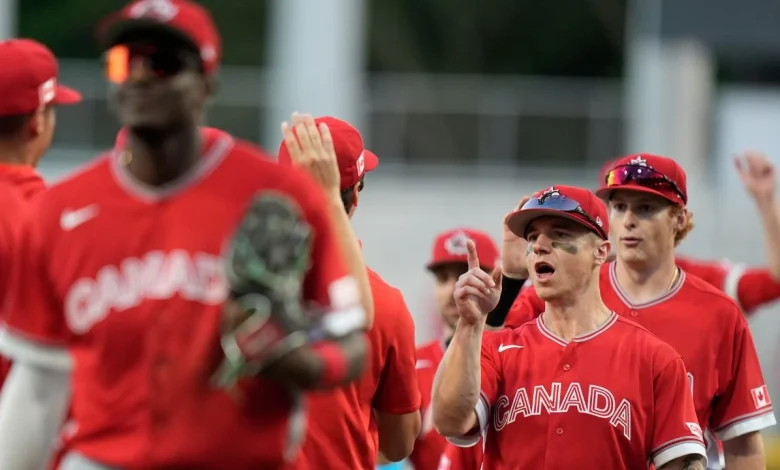
Canada and the United States arrive in Houston for a World Baseball Classic quarterfinal that pairs Canada’s recent Pool A surge with Team USA’s high-profile buildup. This comparison answers a single question: does Canada’s memory-driven cohesion or the U. S. team’s external hype better predict which side has the momentum to win at Daikin Park?
Justin Morneau and Team Canada: a veteran message and a Pool A breakthrough
Justin Morneau delivered a pregame talk and posted a message in the team group chat that veterans and younger players took to heart, manager Ernie Whitt said. Canada followed that approach by beating Cuba 7-2 to secure the top spot in Pool A and the program’s first-ever quarterfinal berth at the World Baseball Classic. Michael Soroka, named the starter for Friday night, connected that 2006 upset memory — an 8-6 victory over the U. S. — with the current group’s desire to create enduring moments.
Mark DeRosa and Jack Hughes: Team USA’s hype, recent matchups and public noise
Manager Mark DeRosa shared a hype message from Jack Hughes with his players and said hockey-inspired encouragement energized the clubhouse. The Americans come in after four straight WBC wins over Canada and with recent dominant scores: the U. S. victories in 2017 and 2023 combined for a 20-1 margin, and the 2023 meeting included a 12-1 mercy-rule defeat for Canada. DeRosa has also faced criticism for careless comments about his team’s status, a public distraction that contrasts with the quieter, veteran-led messaging on the Canadian side.
Canada Vs Usa Baseball at Daikin Park: where momentum, memory and motivation diverge
On one hand, Canada’s approach centers on internal cohesion: Morneau’s line — “It’s an honour to play for your country” — and the team’s celebration of past WBC highs, including the 2006 upset, helped fuel the 7-2 win that clinched Pool A. On the other hand, Team USA has leaned on outside inspiration and visible boosters such as Hughes’ February 22 overtime Olympic goal hype and the circulation of hockey jerseys around the clubhouse. Both sides show clear motivation; they differ in origin and public footprint.
| Year(s) | Result | Context |
|---|---|---|
| 2006 | Canada 8-6 U. S. | Canada’s first WBC upset over the United States |
| 2017 & 2023 | U. S. wins, combined 20-1 | Two recent WBC matchups demonstrating U. S. dominance |
| Pool A (this week) | Canada 7-2 Cuba | Win that secured Canada’s top spot and first quarterfinal berth |
Still, the contrast is concrete in personnel and timing. Canada has a veteran figure in Morneau who returned to the tournament stage after a prior absence, and a starter in Michael Soroka who referenced the 2006 highlights that the program revisits often. The U. S. side has relied on recent hockey triumph symbolism, a group chat circulation of motivational material and public-facing enthusiasm tied to Olympic gold celebrations.
That combination of factors produces a measurable tension: Canada arrives buoyed by a decisive Pool A result and a coherent internal narrative; Team USA arrives with external fireworks, recent lopsided wins in the head-to-head series, and a manager dealing with public scrutiny. Both sides possess a psychological edge but built from different sources.
Finding (analysis): The direct comparison establishes that Canada’s cohesion and veteran-led messaging create an emotional, internally consistent momentum, while Team USA’s hype and recent head-to-head dominance provide a performance advantage on paper. The finding favors no definitive winner; it clarifies that the quarterfinal will test whether emotional cohesion or recent competitive dominance proves more decisive.
The next confirmed event to test this finding is the quarterfinal at Houston’s Daikin Park on Friday night at 8: 00 pm ET. If Canada maintains the focus Morneau sparked and Michael Soroka delivers as the starter, the comparison suggests Canada can translate its cohesion into another lasting WBC moment. If Team USA converts its recent head-to-head dominance into early runs and sustained offense, the comparison suggests the U. S. advantage on results will persist.