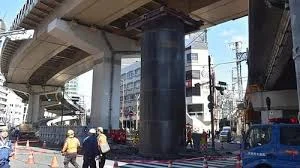
In Osaka, a giant steel pipe abruptly rose out of a highway construction site, baffling commuters and slowing traffic. This before-and-after look at the steel cylinder japan examines two decisive moments: the overnight surge on Wednesday that sent the pipe towering toward an elevated road, and the measured intervention by Thursday that brought it back down to near ground level.
Osaka Highway, Wednesday: A 13-Meter Pipe Emerges Unseen
Overnight in a busy area of Osaka, an underground steel pipe unexpectedly thrust upward at a sewer construction site, at one point standing about 13 meters above the surface. With a diameter of roughly 3. 5 meters, the structure nearly reached an elevated roadway before anyone noticed. The first alert came early Wednesday, when a passerby reported chunks of asphalt falling from the rising cylinder.
Surprise quickly turned to disruption. People passing through the area were puzzled by the sudden appearance, and traffic congestion followed. One office worker who walked by said he could not understand how it happened; another person working nearby briefly wondered if a new road support had been installed overnight. No one reported seeing the moment the pipe began its ascent, leaving the episode without direct witnesses.
City officials later detailed the setting. Crews had been working to connect an existing sewer line with a new channel designed to hold excess rainwater to prevent flooding. The pipe was being used as a retaining structure to stabilize surrounding soil during the operation. Shortly before the incident, workers had drained water from the pipe—an action may have allowed the now-empty structure to float upward.
Thursday in Osaka: Firefighters Push the Pipe Back Down
By Thursday, the response shifted from confusion to control. Firefighters cut a hole in the side of the pipe and injected water into the structure, using the added weight and pressure to push it back into the ground. The intervention lowered the pipe to just several feet above the surface, easing the immediate safety concerns near the elevated road and reducing the visual shock that had unsettled commuters a day earlier.
Officials are planning a more permanent fix. The city intends to cut the final 1. 6 meters that remain visible. That operation will require a road closure lasting several more days, a trade-off that aims to finish stabilizing the site and remove the last protruding section from view and traffic routes.
Osaka Construction Site and Steel Cylinder Japan: Where the Stories Diverge
Set side by side, Wednesday’s surge and Thursday’s controlled descent reveal a striking symmetry: water removal likely let the pipe rise, and water reintroduction helped force it back down. While officials framed the initial lift as something that may have been caused by the pipe floating after it was drained, the next-day tactic of refilling it served as a direct countermeasure, restoring weight and downward force.
That mirrored sequence also separates confusion from clarity. On Wednesday, commuters encountered a baffling hazard with no eyewitness account of how it began. By Thursday, deliberate steps—cutting into the pipe and pumping in water—replaced uncertainty with a defined plan and visible progress. The site transitioned from an unexplained vertical surge to a managed engineering challenge, contained to within a few feet above grade and headed toward removal of the last 1. 6 meters.
| Moment | Site condition | Key action | Outcome/Impact |
|---|---|---|---|
| Wednesday (Osaka) | Pipe reaches up to ~13 meters above ground; diameter ~3. 5 meters | Water had been drained earlier; no eyewitnesses to the rise | Traffic congestion; commuters baffled; asphalt reported falling |
| Thursday (Osaka) | Pipe reduced to several feet above ground | Firefighters cut a hole and injected water into the pipe | Controlled descent; immediate risk reduced near elevated road |
| Next steps | Remaining 1. 6 meters still visible | City plans to cut the exposed section | Road closure expected for several more days |
Analysis: Using the same standards on both moments—cause, method, and effect—the comparison points to a probable water-related mechanism. the drained pipe may have floated, and the fix involved refilling it to counter that lift. The consistent theme is hydraulic control: remove water and risk buoyancy; restore water and regain stability. For commuters, the difference is just as clear—first a surprise obstruction and debris, then a managed reduction and a scheduled closure to complete the job.
That said, questions not directly observed on Wednesday remain limited to what officials described as a possible float after draining. The practical lesson is operational: steps that change a structure’s buoyancy during underground work can trigger abrupt, public-facing consequences. For a high-traffic area under an elevated road, the steel cylinder japan incident shows how quickly a routine utility connection can dominate a commute—and how swiftly coordinated responders can reverse it.
The finding: Comparing Wednesday’s rise with Thursday’s descent establishes that targeted, water-based intervention can neutralize the kind of lift officials linked to prior draining. The next test comes when crews cut the last 1. 6 meters, an operation set to close the road for several days. If the site maintains stability through that work, the comparison suggests the hazard has been both explained and contained.