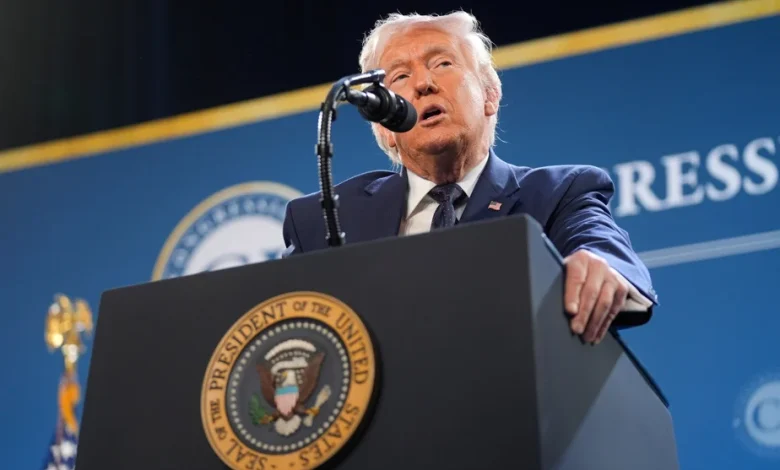
Donald Trump told reporters in Miami that the war with Iran will “end soon” while Tehran continues missile and drone attacks in the Gulf; that exchange sits at the center of the conflit iran. The data suggests his public timetable and promises — from threats to potential sanction relief — are producing immediate market and operational reactions, as seen in oil-price swings and new waves of strikes.
Donald Trump in Miami and the scale of U. S. and Israeli strikes
In a Miami press conference that was his first in ten days of conflict, Donald Trump said the operation was “well in advance” of a four-to-five-week timetable he had cited earlier, and that “the war will end soon. ” Officials have announced that in ten days the United States struck more than 5, 000 targets and hit over fifty Iranian ships. Israel then announced it launched a wave of “large-scale” strikes on Tehran.
The pattern points to a dual message from Washington and its partner: public optimism about an imminent end is coupled with sustained kinetic pressure. That conclusion is grounded in the juxtaposition of Trump’s upbeat timetable and the parallel disclosure of thousands of strikes and new Israeli action against Tehran.
Ali Larijani, the Strait of Hormuz and the immediate trigger for escalation
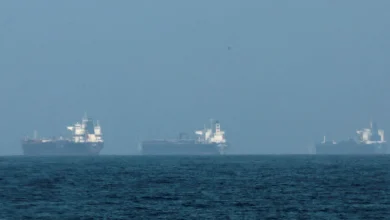
Ali Larijani, head of Iran’s national security council, warned that the Strait of Hormuz would remain impracticable while the war lasted; the context notes that about one-fifth of the world’s oil and LNG transits that passage. Trump also threatened to hit Iran “much harder” if Tehran blocked oil shipments through the strait, and he discussed the situation with other leaders before promising to lift some oil-related sanctions to lower energy prices.
The data suggests the concrete risk to maritime transit is a primary driver of the current escalation and of Washington’s mixed strategy of threats plus economic signaling. Larijani’s warning about the strait and Trump’s explicit threat to respond to any blockade connect directly to the administration’s stated willingness to use force to keep oil flowing and to change sanctions policy to influence prices.
Tehran reactions, markets and the domestic steer in the Conflit Iran
In Tehran, authorities mobilized supporters to celebrate the designation of Mojtaba Khamenei as guide supreme following the death of Ayatollah Ali Khamenei on February 28; Iran says more than 1, 200 people were killed in the opening ten days of strikes. Thousands gathered in a central square chanting slogans in support of the new leader, who has not yet appeared publicly.
Markets responded sharply to statements from Washington on the same day. After rising earlier, Brent crude climbed to near $119. 50 a barrel before falling below $90 when investors interpreted comments about a near end to the fighting as a potential easing; U. S. WTI followed a parallel trajectory. U. S. equity indexes rebounded about 1% as oil and bond yields eased. The pattern points to market sensitivity to political signals: promises of an imminent end and talk of sanction relief triggered rapid swings in both energy and stock markets.
For now, the next confirmed milestone cited in the context is whether the new guide supreme will appear publicly. If Mojtaba Khamenei does appear, the data suggests that his public emergence would crystallize domestic legitimacy and could alter Tehran’s messaging and operational posture in the conflit iran.