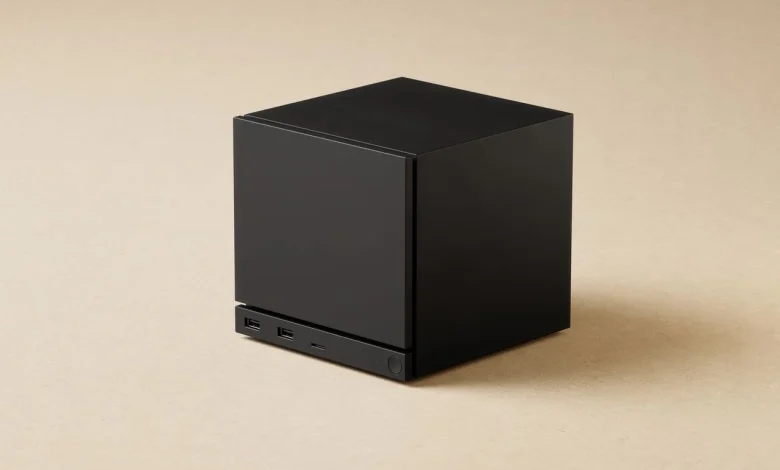
Valve has updated a blog post to confirm it will ship the Steam Machine, Steam Frame, and Steam Controller in 2026, and the company reiterated that message after earlier wording caused confusion. The announcement and the verification rules revealed at GDC point toward a launch where technical verification and the ongoing memory shortage will shape both developer work and how widely the new hardware ships this year; valve steam machine appears squarely inside that trade-off.
Valve’s 2026 ship plan for the Steam Machine, Steam Frame, and Steam Controller
Valve updated a blog post to state that it is shipping all three products in 2026, and later corrected wording that had read “we hope to ship in 2026. ” Kaci Aitchison Boyle said that nothing has changed on Valve’s end, and the blog now reads that “we will be shipping all three products this year. ” The company had earlier shifted its phrasing from “early 2026” or “Q1 2026” to a “first half of the year” timeline, and a correction on March 6th clarified the messaging. Still, the blog and company comments arrive against a backdrop where a RAM crisis has pushed memory costs higher and affected stock: Valve previously warned that the RAM situation would affect availability of the Steam Deck OLED, which has been mostly out of stock since mid-February.
Valve Steam Machine verification targets presented at GDC in San Francisco
At GDC in San Francisco, Valve delivered a talk focused on what developers must do to earn verification for the new hardware family. For the Steam Machine, Valve says that if a game is verified for the Deck it will generally qualify for the Machine, but the Machine’s internal hardware is more powerful and therefore carries its own performance bar: developers must meet a target of 30 fps at 1080p for Steam Machine performance verification. The GDC guidance notes no mention of upscaling or frame generation in that target, which implies native rendering expectations; input requirements remain the same as for the Deck, and games running on the Gabecube with a monitor or TV do not need to hit extra display resolution or legibility targets. The GDC material and the stated 30 fps at 1080p create a clear baseline that developers must address for valve steam machine verification.
Scenarios for Valve’s 2026 ship plan
If current signals continue — the blog confirmation that Valve will ship in 2026, the GDC verification rules, and the existing RAM shortage — then developers are likely to prioritize features and optimizations that meet the published targets. In that scenario, the Steam Frame’s stand-alone verification thresholds (90 fps for VR games, 30 fps at 720p for 2D) and the Steam Machine’s 30 fps at 1080p requirement will channel engineering work toward meeting native performance targets rather than relying on frame generation or unchecked upscaling. That could mean more development time spent on optimization to hit the Steam Machine and Steam Frame verification bars before launch in 2026.
Should the memory shortage worsen, however, hardware availability may look more constrained. The context shows a RAM crisis driving higher costs and that Valve warned RAM issues would affect Steam Deck OLED stock, which has been mostly out of stock since mid-February. If memory costs remain elevated or supply tightens, the practical effect could be limited production runs or staggered availability for the Steam Machine, Steam Frame, and Steam Controller even as Valve maintains a 2026 ship year commitment.
What the context does not resolve is how many units of each product Valve will produce, or precisely when in 2026 the shipments will reach consumers. The next confirmed milestone in the context is Valve’s commitment that all three products will ship this year, and the next clear signal to watch in the documented timeline will be Valve’s execution of that shipment plan and any subsequent inventory or timing announcements tied to the RAM situation.