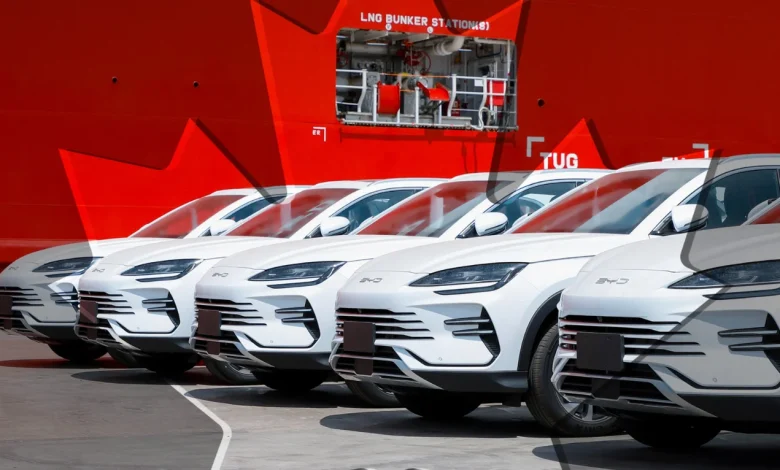
Tuesday at 9: 15 a. m. ET Tesla emptied its Canadian Model 3 inventory and moved U. S. -built units back to the United States, a direct response to the launch of Canada’s Chinese EV import quota; tesla canada appears positioned to lean on Shanghai-built Model 3 and Model Y supply now that import permits are live.
Tesla Canada clears Model 3 stock and shifts U. S. -built units
Tesla has wiped its entire Canadian Model 3 inventory and sent the remaining U. S. -built units back to the United States. The company cited the economics of selling Fremont-built Model 3s at tariff-inflated prices, and sources familiar with the matter said those units can sell more competitively once they return to U. S. markets.
Border Services Agency action on March 1 triggered the inventory move
Canada officially opened its new Chinese EV import program on March 1 and the Canada Border Services Agency repealed the 100% surtax on Chinese-built EVs, replacing it with a 6. 1% most-favored-nation tariff under the quota framework. That change made Shanghai-built vehicles immediately more price-competitive versus U. S. -built Model 3s being sold in Canada at substantially higher, tariff-inflated prices.
tesla canada’s decision reflects the immediate commercial choice: why offer a Fremont-built Model 3 in Canada when Shanghai-built units can enter under the new framework at a much lower tariff and be priced far below the previous surtax-inflated levels.
BYD registrations and certification timing limit immediate competition
Transport Canada’s Appendix G registry shows BYD Co. has registered passenger vehicle factories, listing manufacturing plants in Shenzhen and Xi’an and marking BYD’s official step into the Canadian consumer market. Those passenger car listings follow BYD’s earlier Canadian registrations for buses and trucks and an existing BYD bus assembly plant in Newmarket, Ontario.
Under the current timeline, competitors such as BYD still face certification and registration steps before they can begin shipping passenger cars in volume. That gap in readiness has amplified Tesla’s advantage: Tesla’s Shanghai-built Model 3 and Model Y are already certified in Transport Canada’s database, enabling immediate import under the quota while BYD and others finalize approvals.
Industry estimates cited in coverage point to a scenario where Tesla could secure a substantial share of the first-half allocation, giving its Shanghai output a head start in the newly opened Canadian market.
Under the framework published by Global Affairs Canada on February 24, the first 24, 500 vehicles can enter between March 1 and August 31 on a first-come, first-served basis at a 6. 1% tariff, with a second allocation of 24, 500 plus unused first-half permits covering September 1 through February 28, 2027; import permits are shipment-specific and valid for up to 60 days.
Tesla’s inventory move recreates a supply-chain loop outlined over the past two years: Canadian buyers had previously seen Chinese-made Model 3s from Shanghai, then U. S. -built units from Fremont when surtaxes took effect, and now face a return to China-built availability as tariffs fall and permits open.
The next confirmed milestone is the first allocation window that runs through August 31; more import permits and any reallocations for the second half begin on September 1. If Tesla secures a large portion of the initial 24, 500 permits, market prices and available models in Canada could shift quickly as Shanghai-built units arrive.