After more than a week of play, pokopia has landed as a fully formed life-sim that swaps the franchise’s traditional combat for daily caregiving and community building. That shift matters now because the title is a Switch 2 exclusive and could reshape how players choose consoles this year.
Pokopia and Professor Tangrowth Set the Tone on an Abandoned Island
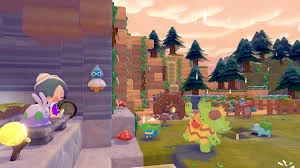
The game places players on a long-abandoned island once inhabited by humans, where they take on the form of a human-shaped Ditto and are greeted by a large, squiggly-faced guide named Professor Tangrowth. From that starting point the design deliberately avoids combat: there are no battles to win, only Pokemon to befriend and needs to meet. Tasks span everyday errands — watering plants, fixing roads, finding food for hungry Pokecritters — and more creative work like crafting items, decorating homes and building habitats that attract new creatures.
Gameplay encourages gradual population growth. A single or couple of friends can expand into “20, 30, or more” Pokémon as players build the right environments and encounter animals by chance. Players can buy kits to erect initial shelters — a leaf hut can be upgraded into a larger home — and collect odd finds such as fossil remnants or mysterious feathers while foraging the islands. The aim is social and environmental restoration rather than conquest.
Switch 2 Exclusivity and Nintendo’s Game Share Shape Access
The decision to make the title a Switch 2 exclusive is a decisive factor in how the release will land. That exclusivity has already had an emotional impact on players: one firsthand account describes a young fan being “crushed” by not having a Switch 2, framing the game as a potential console-driving “killer app. ” At the same time, developers provide a limited bridge to the previous hardware generation through Game Share, which permits some multiplayer interaction between a Switch 2 and an original Switch, though that experience is acknowledged as not fully equivalent.
What makes this notable is the way hardware limitations and access strategies may amplify demand: a title centered on daily social routines and long-term world-building creates a persistent pull to play on the platform that delivers the full feature set. Nintendo’s involvement is visible in presentation choices, including official screenshots that mirror the playable environments, and in design parallels to the company’s broader life-sim traditions.
Design Choices Echo Animal Crossing and Contrast Recent Pokémon Battles
Players and reviewers draw a direct line between pokopia and Animal Crossing, noting similar menu flows, character reaction sounds and the emotional cadence of slow, repetitive improvements to community life. Yet pokopia expands the template: it is not a single village but a connected set of islands whose full size remains unclear even after extended play. The developer’s intent to diverge from the franchise’s battle-centric recent entry, Legends Z-A, is explicit in how the systems prioritize friendship and habitat creation over real-time combat.
The consequence of that design is a different player rhythm. Rather than learning attack moves and engaging in continuous fights, users spend hours on maintenance and creation — gardening, resource collection, crafting, decorating and connecting with newly arrived Pokémon. That loop is reinforced by the discovery mechanics: some creatures arrive by chance, while others turn up only when players create suitable habitats, tying creative investment directly to measurable population changes.
After a week-plus of hands-on time, the experience elicits a sense of cozy attachment similar to earlier life-sim peaks; one player even compares the feeling to the early pandemic months of 2020, a period associated with finding solace in gentle, routine gameplay. The title’s role as a 30th-anniversary celebration of the franchise lends another layer of intent, positioning this softer spin as a complementary piece alongside more action-oriented entries.
In short, pokopia reframes Pokémon as a restorative, community-focused simulation. Its exclusivity on a new console and deliberate rejection of battle mechanics create both an emotional draw and a tangible market consequence: players seeking the full, island-spanning experience will be pushed toward the hardware that hosts it.