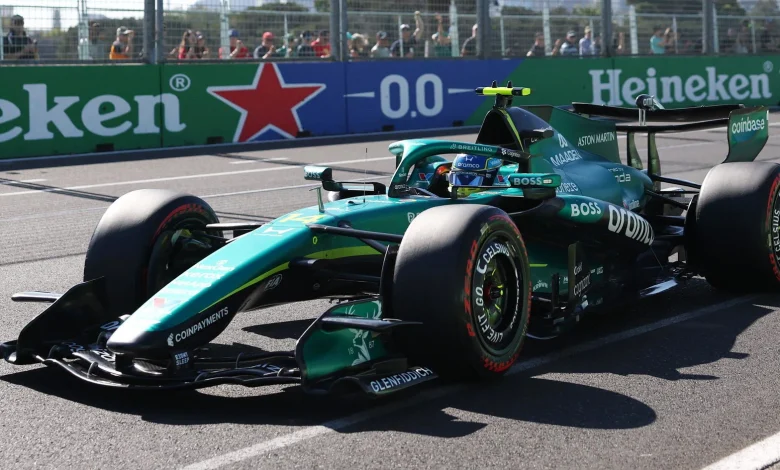
Teams and Fernando Alonso now face a sharply reduced pool of race data after his car completed only 13 laps before a forced stop, constraining setup work and on-track learning for Aston Martin. 1: 14 p. m. ET — the team ordered Alonso to stop following an issue with his car, a decision that ended his initial stint and produced a limited dataset for the rest of the field.
Alonso F1 left with only 13 laps after Aston Martin ordered an immediate stop
Fernando Alonso managed just 13 laps at the start of the Australian Grand Prix before the Silverstone-based Aston Martin squad told him to pull into the pit lane and retire, cutting short his opening running and leaving engineers without extended race mileage. Alonso had been running as high as 10th in the opening laps but tumbled back through the order prior to the instruction to stop.
Qualifying hinted at progress: P17 and a near-Q2 lap underlined limited but real gains with Honda
Alonso had shown signs of improvement in Qualifying, posting a 1m 21. 969s lap that briefly put him into a Q2 position before Alpine’s Franco Colapinto demoted him to P17, evidence the team had made pace gains despite low running. The squad’s joining with engine partner Honda for the season was matched by constrained mileage in pre-season and practice; Alonso missed FP1 because of a suspected power unit issue and the team logged fewer laps than rivals across sessions.
Adrian Newey’s warning and the mid-race garage stop that ended in a second retirement on lap 32
Adrian Newey had warned that Alonso could not complete more than 25 laps without risking permanent nerve damage to his hands, a limitation that framed the team’s cautious approach when problems emerged on track. In a short statement, Aston Martin confirmed: “The team decided to bring Fernando back into the garage to make some adjustments to his AMR26. He has now rejoined the Australian Grand Prix. ” Alonso rejoined the race 11 laps after the initial retirement but was forced to retire once again on lap 32, leaving the team without a sustained race run.
Still, Alonso described the Qualifying improvement as a meaningful step forward for the car’s potential, noting the team had gained roughly two seconds simply by getting more running time on track between sessions. Yet the limited laps in the race and the subsequent second retirement mean the squad cannot translate that single-lap promise into race setup confidence or long-run data.
That lack of running also intersected with a parts constraint flagged by the team: Lance Stroll missed Qualifying after a suspected internal combustion engine problem in FP3 and the squad is short on replacement parts, factors that restrict how aggressively engineers can push the cars during a race weekend.
For now, Aston Martin faces the immediate consequence of fewer verified settings and less telemetry from Alonso’s car, while mechanics must prioritize component preservation across the remaining rounds of the weekend rather than aggressive experimentation.
Next on the calendar is the race in China next week; if Aston Martin can avoid further power-unit failures and preserve parts through careful monitoring, both cars could be prepared to race in China. If another unit issue appears, however, the team’s limited spares and Alonso’s earlier warning about lap limits risk forcing more early retirements or conservative strategies in the coming event.