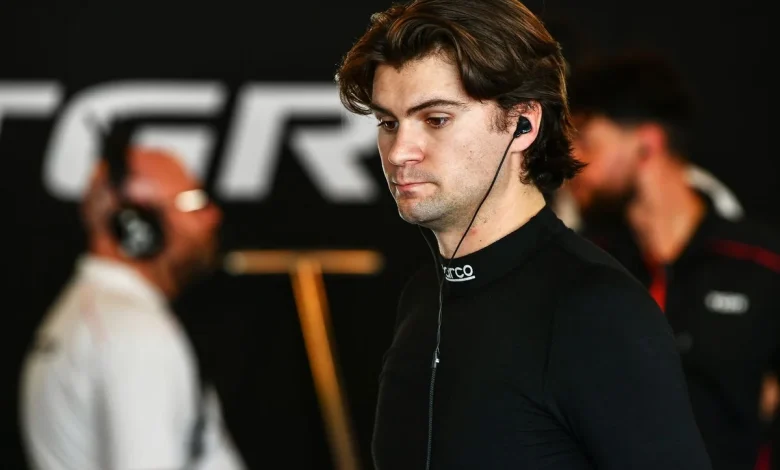
Colton Herta’s first outing in the f2 championship at Melbourne ended with a heavy practice crash that stopped the session under a red flag. The setback arrives at the start of a compressed weekend, sharpening the focus on how quickly the American can reset before qualifying and two races.
Albert Park collision at Turn 10
Herta’s incident unfolded with a little more than 25 minutes left in free practice at Albert Park. Exiting Turn 10, he lost control and struck the curbs, scattering debris across the racing line. Marshals halted running with a red flag while the car and fragments were cleared. The Hitech driver climbed out unaided and walked away to applause from the grandstands before heading back to the garage to regroup.
Multiple caution periods, including both yellow and red flags, punctuated the session as several drivers wrestled with the limits of the street circuit. That pattern underscored how quickly conditions can shift at this venue and how easily small mistakes turn into stoppages. The broader implication is that track time will be at a premium for rookies and returnees alike, increasing the cost of any early miscue.
What makes this notable is the contrast between Herta’s profile and the demands of a new environment: a well-established race winner stepping into different machinery on an unforgiving layout. One off in practice may not decide a weekend, but it tightens the margins ahead of the next competitive runs.
Hitech entry and a path shaped by IndyCar
Herta’s debut with Hitech in the FIA F2 field marks a significant step in a career better known for success elsewhere. He arrives with nine wins in IndyCar and a run to vice-champion in 2024. He also holds a current role as a test driver with Cadillac this year, a position that keeps his name in conversations around future opportunities at the top tier.
The timing matters because the transition asks him to adapt quickly—new car, new team, and a street circuit that punishes overreach. The early red flag means fewer representative laps at speed than planned, and it shifts more of the learning curve to qualifying. For a driver aiming to show immediate pace, each lap now carries greater weight.
Hitech’s task is straightforward but urgent: assess damage, execute repairs, and present a settled car for the next session. With only limited track time remaining, any changes to setup will need to be decisive rather than exploratory. The cause-and-effect is clear—lost laps in practice compress the window for refinement, and that can echo through the rest of the weekend.
F2 weekend schedule in Melbourne
The f2 program now pivots to qualifying on Friday, followed by a sprint race on Saturday and the main race on Sunday. A clean run in qualifying would help restore momentum after the practice stoppage, and a solid grid spot could reduce exposure to first-lap risk in the shorter sprint. Conversely, a compromised starting position would leave additional work for both races.
For the field at large, the stop-start rhythm of practice served as a cautionary marker for how Albert Park can evolve through a weekend. As more rubber goes down and temperatures change, grip levels typically improve, but mistakes remain costly when barriers sit close to the racing surface. That was evident in the sequence of caution periods and the debris-related interruption that defined the opening session.
Herta, uninjured and back with his team, now faces the immediate test of converting limited mileage into race-ready confidence. The next sessions will show whether the practice crash becomes an early footnote or the pivot point of his first Melbourne weekend in FIA F2.