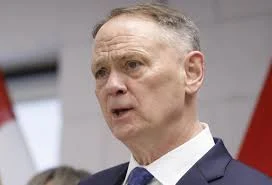
Defence Minister David McGuinty said Canada knew “from the beginning” that the caf would not join the U. S. and Israel in offensive military action against Iran, emphasizing Ottawa has not participated in the conflict and has no intention of doing so. McGuinty made the remarks as he discussed Canada’s broader military posture and efforts to protect Canadians in the region.
What McGuinty Said About Caf And Canadian Forces
McGuinty told reporters the decision not to join the offensive prosecution of the war was clear from the outset of the conflict more than two weeks ago. He said Canada had not been consulted before the U. S. and Israel launched military action in Iran, and reiterated that Canada “has not participated in this conflict, and Canada has no intention of doing so. “
On a related personnel matter, McGuinty said he had not been aware of the resignation of the U. S. National Counterterrorism Center director Joe Kent, who said he “cannot in good conscience” back the Trump administration’s war because “Iran posed no imminent threat”. McGuinty added that Kent “made a principled decision, I suppose. “
The minister stressed two priorities: helping Canadians in the region who want to leave and protecting Canadian forces from harm. He said details about Canadian military operations in the region could not be revealed for security reasons. McGuinty also noted that Ottawa had been “very, very careful in terms of taking steps in any direction. “
NATO, The Strait Of Hormuz And Canada’s Stance
Foreign Affairs Minister Anita Anand said Iran’s blockade of the Strait of Hormuz is in violation of the United Nations Convention on the Law of the Sea, and that the closure has practical global impacts because countries are unable to receive energy exports, fertilizer and other goods in the food supply chain.
Anand said that, to her knowledge, NATO has not had conversations about answering a U. S. request for assistance to reopen the shipping channel. She said a request had not been made to NATO for the type of assistance being sought and emphasized that the alliance’s principles of collective defence and deterrence are triggered by the alliance as a whole, not by one country.
On the diplomatic front, Anand said she expected to see the U. S. Secretary of State Marco Rubio next week at a G7 foreign ministers meeting and said she was working with countries from the Gulf region and around the world on the legal point that ships from all countries have the right to pass through the strait.
Canada’s Options And Limits
McGuinty said Ottawa was “leaving the door open” to providing assistance to any Gulf nation that requires help defending against Iranian attacks, but that no requests for that assistance had been received so far. He cautioned that any provision of help was not guaranteed.
Both ministers framed Canada’s approach as cautious and legally minded: Ottawa has stressed it will follow developments “hour by hour, ” avoid becoming directly involved in offensive operations, and prioritize the safety of Canadian personnel and citizens in the region. The government’s position, as stated by McGuinty and Anand, remains that Canada will not join the prosecution of the war offensively and will only consider assistance within the bounds of requests and international law.