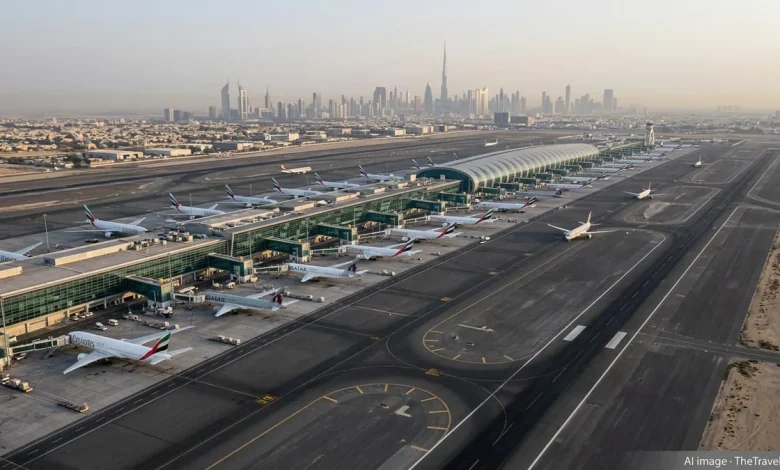
emirates airlines is operating some long-haul services with unusually light premium cabins as rapidly widening airspace closures across the United Arab Emirates, Qatar, Iran and Israel force a wholesale reconfiguration of global flight paths. The result: fewer connecting high-yield passengers, reduced schedules from Gulf hubs, and a fast-moving operational puzzle for carriers and corporate travelers.
Airspace Closures Are Reshaping Routes and Schedules
Coordinated airspace restrictions across the UAE, Bahrain, Qatar, Israel, Iran and Iraq have at times closed or heavily constrained civilian operations, redrawing where and how airlines can fly. Emergency security controls now govern some of the region’s skies, leaving only carefully vetted corridors for a reduced number of flights. Waves of missile and drone attacks and retaliatory strikes have driven the moves and heightened concern about the vulnerability of civil aviation to modern long-range weapons.
For passengers the practical impact is a patchwork of suspended routes, elongated detours and last-minute schedule changes. Dubai, long considered a stable transit hub, is now at the center of a near-daily reassessment of safety protocols, diplomatic decisions and airline risk tolerances. The operational disruption has led to waves of cancellations and sharply reduced schedules from Dubai, Abu Dhabi and Doha since February 28.
Emirates Airlines Faces Sparse First and Business Seats
Publicly available scheduling data and industry analysis indicate that marquee Gulf carriers, including Emirates Airlines and Qatar Airways, are operating some overnight long-haul services with large numbers of empty lie-flat seats in first and business class. The sudden collapse of through-traffic has hit premium cabins harder than economy on certain sectors that previously depended on predictable corporate and connecting leisure flows through the Gulf.
Corporate travel managers have responded by imposing blanket restrictions on staff travel, further hollowing out the transit business on which premium cabins relied. Analysts and logistics bulletins note a striking pattern: aircraft that once departed with packed premium cabins of transit passengers are now, on some days and routes, leaving with unusually light premium loads.
Shifting Routes Raise Brand Questions and Open Doors for Asia-Based Carriers
The upheaval is sharpening a broader question: can Asia-based airlines build the same global brand strength that Gulf super-connectors developed? The narrow corridor across the Caucasus has become a critical alternative link between Europe and Asia as carriers avoid the Middle East. There are reports of attempts to disrupt that corridor, including strikes in adjacent territories, and a U. S. administration estimate projects the conflict could continue for several more weeks.
Beyond immediate operational disruption, the long-term risk of regional political and military conflict threatens the safety-first brand value Gulf carriers cultivated. Safety rankings and public-facing safety initiatives have been a visible part of that brand promise. At the same time, some Asian carriers have already moved to position themselves to serve rerouted passengers, and previous shifts in global routing have allowed Turkish, Thai and Chinese carriers to expand presence when other airlines retreated from certain airspaces.
The airspace crisis has produced a two-part reality for airlines: an urgent operational scramble to keep planes flying safely and an emerging strategic contest over who captures diverted transit traffic and preserves brand trust. With no immediate resolution guaranteed, hubs and carriers worldwide are adjusting schedules and reassessing network plans while travelers face continued uncertainty.