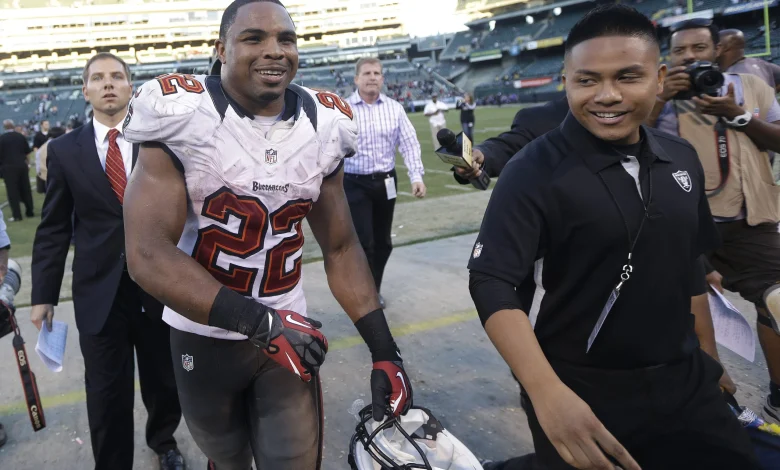
The family of doug martin has sent his brain to Boston University’s CTE Center and retained civil rights attorney John Burris, while multiple Oakland agencies continue probing the circumstances of his death. That combination of forensic testing and overlapping investigations points toward a period of evidence-driven decisions before any legal action or public release of body camera footage.
Oakland Police, Alameda County Coroner, and the investigation into Oct. 18 (ET) death
Martin died on Oct. 18 (ET) at age 36 after what police described as a “brief struggle” with Oakland Police Department officers who were responding to a home break-in; medics transported him to a nearby hospital, where he later died. The department’s Homicide Section and Internal Affairs Bureau, the Police Commission’s Community Police Review Agency, and the Alameda County District Attorney’s Office are all listed as investigating the incident. The Alameda County Coroner’s Bureau is completing an autopsy report but is awaiting a toxicology scan; toxicology tests generally take six to eight weeks to be completed.
Interim OPD Chief James Beere declined in December (ET) to make public the officers’ body-worn camera videos from the incident, citing an active investigation as the basis for withholding the footage. Civil rights attorney John Burris has viewed some, but not all, of the officers’ body-camera footage and said a compilation or summary alone does not provide enough perspective to judge officer conduct.
John Burris, family choices, and Boston University CTE testing
The family has retained civil rights attorney John Burris, who said he is holding off on deciding whether to pursue legal action against the Oakland Police Department or the city until he has reviewed all reports. Burris has posed open questions — “Was it a medical condition? CTE? The police?” — and emphasized that the cause of death remains unclear while investigations are incomplete. Martin played seven NFL seasons from 2012 to 2019, and his family moved quickly to send his body to Boston University’s Chronic Traumatic Encephalopathy Center “immediately after” his death so specialists could evaluate his brain for CTE.
The CTE examination has not yet been completed, Burris said. That pending neurological review sits alongside the coroner’s autopsy and the police investigations, creating multiple technical and legal milestones that Burris will use to decide whether to file civil claims.
Scenarios for Doug Martin: If investigations continue and Should CTE results arrive
If the OPD investigations and the Alameda County Coroner’s autopsy—including the toxicology scan—produce findings that point to a medical condition or to CTE as a contributing factor, Burris has signaled the family may defer legal action while they assess medical causation. That path is grounded in Burris’s statement that he will not presume legal action is necessary until all reports are reviewed.
Should evidence from the officers’ body-worn camera footage or the multi-agency probe indicate misconduct by officers, the family, represented by Burris, would have a clearer basis to pursue civil claims. Burris’s access to some footage but not all, combined with the department’s decision in December (ET) to withhold videos because of the active probe, establishes a visible trigger: wider disclosure of full body-camera recordings could change the family’s legal calculus.
Based on context data:
- Death date: Oct. 18 (ET); age 36.
- Playing career: seven seasons, 2012 to 2019.
- Investigating bodies: OPD Homicide Section, Internal Affairs Bureau, Community Police Review Agency, Alameda County District Attorney’s Office.
- Autopsy pending: Alameda County Coroner’s Bureau awaiting toxicology (six to eight weeks typical).
- CTE testing: body sent to Boston University CTE Center immediately after death; examination incomplete.
The next confirmed milestone in the public record is completion of the Alameda County Coroner’s autopsy report once the toxicology scan is finished. What the context does not resolve is whether the toxicology results or the Boston University CTE examination will indicate a medical cause, or whether full body-camera footage will be released as investigations proceed. For now, the case is moving through forensic and administrative gates that will determine whether the family’s course remains investigatory or shifts to litigation.