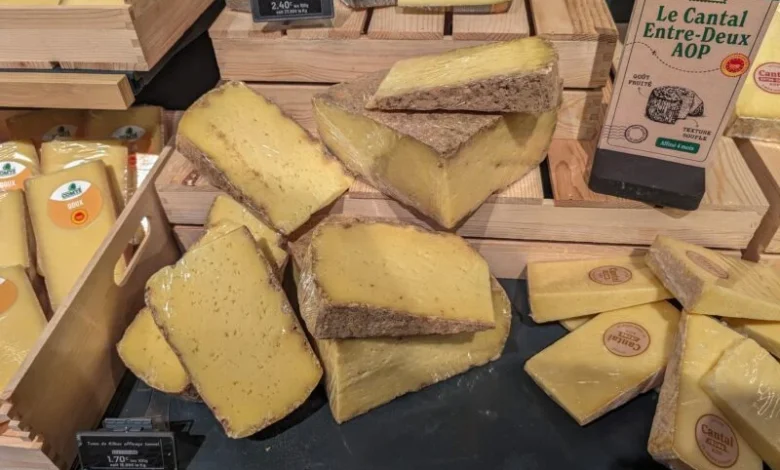
Two separate recalls of French cheeses — a Cantal AOP entre‑deux lot 251464 sold by Grand Frais and Fresh and two Les Petites Laiteries raclette references flagged for possible contamination — represent a clear rappel fromages pattern touching supermarket and boutique channels. This cluster of alerts points toward increased attention on raw‑milk specialties, the distinct incubation timelines for E. coli and Listeria, and extended consumer and clinical follow‑up.
E. coli contamination in Cantal AOP: Grand Frais, Fresh and lot 251464
Confirmed testing found E. coli contamination in a single lot, 251464, of Cantal AOP entre‑deux that was commercialised by Grand Frais and Fresh from 29/01/2025 to 07/02/2025. Health guidance tied to that finding warns that Escherichia coli can cause gastro‑enteritis within three days of consumption, with abdominal pain and diarrhoea that can include blood, with or without fever. Consumers who bought that lot and develop those symptoms are advised to consult their doctor and to report the consumption and the germ they may have been exposed to.
Rappel Fromages: Les Petites Laiteries raclette, FROMAGERIE DU VIVARAIS and LAITERIE LA SAVOYARDE
At the start of March 2026, two raw‑milk raclette references from Les Petites Laiteries — produced by FROMAGERIE DU VIVARAIS / LAITERIE LA SAVOYARDE and sold from 16/02/2026 to 05/03/2026 — were recalled for possible Listeria monocytogenes contamination. The analyses cited show Listeria can survive cold and develop in raw‑milk cheeses. Ingesting Listeria may produce high fever, headaches and muscle aches, and the incubation period can extend up to eight weeks, which places a long tail on clinical monitoring for exposed consumers. The recall notice instructs that the cheeses must not be consumed, even melted, and recommends isolating then destroying or returning them for a refund until 20/03/2026.
20/03/2026 deadline, distribution channels and what the pattern implies
Both episodes name concrete commercial windows and distribution routes: the Cantal AOP lot sold 29/01/2025–07/02/2025 through Grand Frais and Fresh, and the raclette sold 16/02/2026–05/03/2026 TRADITION TERROIRS and DISTRAL BOUTIQUE LAITERIE LA SAVOYARDE. Still, the public actions recommended are similar — do not consume, isolate or destroy the product, or return it for reimbursement by a set date such as 20/03/2026. That common playbook ties laboratory detection to rapid retail-level recalls and consumer refund pathways.
Based on context data:
| Product | Pathogen | Sales window | Retail/Distributor |
|---|---|---|---|
| Cantal AOP entre‑deux (lot 251464) | E. coli | 29/01/2025–07/02/2025 | Grand Frais, Fresh |
| Raclette au lait cru (two references) | Possible Listeria monocytogenes | 16/02/2026–05/03/2026 | TRADITION TERROIRS; DISTRAL BOUTIQUE LAITERIE LA SAVOYARDE |
That table captures the immediate comparables: distinct pathogens, different incubation dynamics, and overlapping but separate distribution channels. For consumers, the practical difference lies in symptom timing: E. coli effects often appear within three days, while Listeria may not manifest for up to eight weeks, extending the period during which exposed people should be alert.
Scenario A: If testing continues to identify contaminated lots, recalls expand
If laboratories continue to identify pathogens in processed or artisanal cheeses, similar recalls could follow the pattern set by lot 251464 and the Les Petites Laiteries raclettes. Under that conditional path, retailers named in the notices would maintain refund windows like the 20/03/2026 deadline, and consumers would repeatedly be advised to isolate or return suspect products. Medical consultation guidance tied to specific symptoms — fever, abdominal pain, diarrhoea, headaches and muscle aches — would remain the immediate public health response.
Scenario B: Should Listeria‑linked illnesses surface within the eight‑week incubation window
Should cases of listeriosis be reported in the weeks after the 05/03/2026 sales window, the eight‑week incubation period cited for Listeria monocytogenes means clinicians and public health authorities would face a delayed cluster of clinical diagnoses. That outcome would change the operational focus from immediate product withdrawal to case tracing and complications among the high‑risk groups named in the notice: pregnant women, older people, immunocompromised patients and those with chronic illnesses.
Next confirmed milestone in the documents is the refund deadline of 20/03/2026 for the Les Petites Laiteries items. What the context does not yet resolve is whether further contaminated lots exist or whether clinical cases tied to the raclette sales will be reported during the Listeria incubation window; a new lab detection or a reported listeriosis case would resolve that uncertainty. For now, consumers who bought the named lots or the two raclette references should follow the isolation and return guidance and consult a doctor promptly if they develop the specific symptoms listed in the notices.