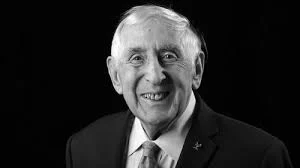
Irish Olympic great ronnie delany has died at 91, prompting a look back at the 1956 Melbourne 1, 500m final that defined his legacy. Set against John Landy, the pre-race favorite and mile world-record holder, the comparison asks a simple question: how did an underdog overturn expectations on the biggest stage, and what does that reveal about competitive execution under pressure?
Melbourne Cricket Ground, 1956: The decisive 1, 500m move and record
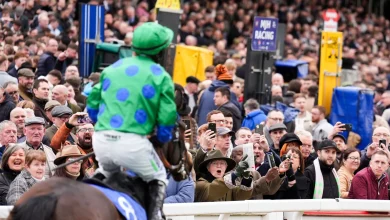
At just 21, Ronnie Delany ran a race built on patience and precision before 120, 000 spectators at the Melbourne Cricket Ground. He framed his approach in stark terms: “My only goal was to win. ” Two hours before the final, he turned on the nerves; one hour out, he became “the cold, calculated, tactician. ” With 60 meters to go, he made a single, definitive move past Britain’s Brian Hewson and never looked back.
Delany stopped the clock at 3: 41. 2, an Olympic record by exactly four seconds, then dropped to his knees in prayer. His path to that moment had gathered speed months earlier: on June 1, 1956, he became only the seventh man to break four minutes for the mile, running 3: 59. 0 in California. Even after being badly spiked in an 800m race in Paris and racing only twice more that summer, he arrived sharpened—helped, in part, by a lighter schedule. Selection by the Olympic Council of Ireland came late, but his tactic was unwavering: engineer the right “shape of the race, ” then strike once.
John Landy’s favorite status and the record-book expectations
John Landy entered the final with the weight of expectation. The 26-year-old Australian had lowered Roger Bannister’s mile world record to 3: 58. 0 and carried home-nation hopes. Britain fielded three finalists, including Hewson, reinforcing the sense of a crowded podium fight where multiple contenders, not just one, could win.
Yet the stopwatches and storylines diverged. In the final meters, Delany’s late surge proved decisive. Klaus Richtzenhain of Germany took silver. Landy, despite the record and the buzz, finished with bronze. The Melbourne favorite’s résumé made him the benchmark; Delany’s timing on the day beat the benchmark.
Ronnie Delany vs. John Landy: Expectation, age, and outcome
| Criteria | Ronnie Delany | John Landy |
|---|---|---|
| Status before race | Dark horse | Favorite |
| Age in 1956 final | 21 | 26 |
| Mile benchmark before Melbourne | 3: 59. 0 (June 1, 1956) | 3: 58. 0 (lowered world record) |
| Medal in 1, 500m final | Gold (Olympic record 3: 41. 2) | Bronze |
| Nationality | Ireland | Australia |
Side by side, the verdict is clear: on that day, execution beat expectation. Landy’s credentials set the pre-race narrative; Delany’s racecraft rewrote it in the home straight. That outcome became a pillar of Irish sporting history. He was Ireland’s third Olympic gold medallist at the time—after Pat O’Callaghan in the hammer (1928 and 1932) and Bob Tisdall in the 400m hurdles —and remains Ireland’s last Olympic gold medallist in athletics.
The Melbourne win also anchored a broader career arc. Delany’s collegiate success at Villanova University included four individual NCAA outdoor titles. He added a 1, 500m bronze at the European Championships in Stockholm in 1958 and an 800m gold at the World University Games in Sofia in 1961. The national resonance persisted: one minister said his 1956 gold marked the first for Ireland in two decades and stood as a high point until 1992 in Barcelona.
In the wake of his passing, tributes framed that resonance in personal and institutional terms. The Minister for Culture, Communications and Sport, Patrick O’Donovan TD, and the Minister of State for Sport and Postal Policy, Charlie McConalogue TD, offered condolences, describing a role model whose impact reached generations. The Olympic Federation of Ireland called Delany one of the nation’s greatest Olympians, with its president and CEO noting his leadership of the Irish Olympians Association and continued advocacy for athletes.
Stripped to its essence, the Delany–Landy comparison shows that one well-timed move can overturn months, even years, of assumptions. That lesson endures alongside the place-name honor of Delany Park in Arklow and the memories of teammates and rivals. If future contenders control the race shape to unleash a single, decisive strike, the ronnie delany blueprint suggests favorites can be unseated when it matters most.