carlos alcaraz turned a troubling start into a three-set win at Indian Wells while Novak Djokovic has publicly praised the same player’s golf ability. Which side — match-day toughness or off-court sporting skill — better illuminates Alcaraz’s current form and public reputation?
Carlos Alcaraz at Indian Wells: comeback, scores and physical check
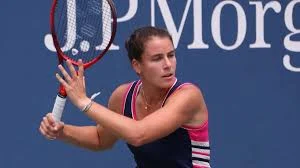
On the stadium court Alcaraz trailed by a set and an early break before reversing the match to win 6-7, 6-3, 6-2. He stretched his perfect start to the season to 14-0 and recorded his 32nd straight victory on outdoor hard courts. Match detail shows he broke on four of 10 break chances across the second and third sets and nearly claimed the opening set, only to mishit a forehand on a set point at 6/5.
Alcaraz also registered a brief ankle misstep early in the second set that prompted a plan to have his physio check it, but his movement in the third set was described as near-perfect. His next confirmed opponent is Casper Ruud in the last 16, who himself recovered from an opening set loss to beat Valentin Vacherot 3-6, 6-3, 6-4.
Novak Djokovic and Carlos Alcaraz on the links: public praise and peer perspective
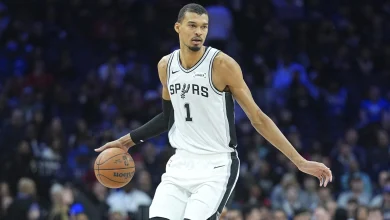
Novak Djokovic spent a day playing golf with Alcaraz and Alexander Zverev and publicly praised their games. Djokovic said he had fun and that the day involved laughter and “mind games. ” He described being behind the others, saying, “I’m okay, but I’m behind these guys. ” Djokovic recalled a drive on the first hole when one player ripped a 300-yard drive and went for an eagle, asking rhetorically, “Is there anything you’re not good at, man?”
Djokovic’s remarks place Alcaraz in a peer-to-peer light: not just a rival on court, but a capable athlete off it. The exchange confirms that Alcaraz participates in golf rounds with other top players and that his golf performance draws direct, positive comment from a leading rival.
Carlos Alcaraz and Novak Djokovic: where match resilience and leisure skill align and diverge
Applying the same criteria — observable performance, frequency, and public acknowledgment — clarifies the contrast. On observable performance, Alcaraz delivered quantified tennis results at Indian Wells: a three-set comeback, conversion of break chances, and continuation of two separate streaks (14-0 season start and 32 straight outdoor hard-court wins). On observable golf performance, Djokovic’s on-course impression and his quote about being outdriven supply qualitative praise but no match-style statistics.
On frequency, the tennis facts show sustained competition and consecutive wins that define current form. For golf, the context notes multiple recreational rounds: Djokovic played with Alcaraz and Zverev, and earlier Alcaraz previously played with Spanish peers and at a pro-am. That suggests regular leisure involvement but not the competitive cadence seen on tour.
On public acknowledgment, tennis performance generates concrete milestones and scheduled next matches, while Djokovic’s remarks offer reputational color from a high-profile peer. Both kinds of evidence shape public perception, but they do so differently: one by match metrics and advancement, the other by peer testimony and anecdote.
Still, the two sides intersect. Alcaraz’s on-court toughness — overcoming an early break, saving and then creating pivotal chances — sits alongside a sporting versatility visible in golf, where peers note his long drives and course poise. The ankle misstep at Indian Wells is a physical limit that was quickly diagnosed in-match and checked; golf praise highlights technique and composure away from match pressure.
Analysis: the comparison shows that measurable competitive resilience and admired leisure skill reinforce different aspects of Alcaraz’s profile. Tennis results supply the proof points that determine tournament progress; Djokovic’s praise supplies a peer-driven narrative that broadens public perception.
Finding: This comparison establishes that Alcaraz’s court resilience is the primary indicator of his competitive standing, while Djokovic’s praise of his golf game amplifies his reputation beyond tennis. The next confirmed event to test that finding is Alcaraz’s last-16 match against Casper Ruud. If Alcaraz maintains his ability to overturn deficits and convert break chances against Ruud, the comparison suggests his on-court form—not off-court leisure skill—will remain the decisive factor in his season progress.