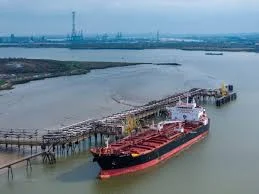
The Bantry Bay oil and chemical tanker unloaded its cargo at the Navigator Terminals on the River Thames in London on Tuesday, a concrete reminder of fuel moving through global infrastructure. The iea is set to recommend the release of 400 million barrels of oil, the largest move in the agency’s history, intended to try to restrain soaring crude prices amid the U. S. -Israeli war with Iran.
Katherina Reiche and Germany join a 400 million-barrel proposal
Germany’s Economy Minister Katherina Reiche confirmed the 400 million barrel figure and said Germany would participate in the release, though details were still to be clarified. Spain’s energy minister and Sara Aagesen both described the plan as the largest proposal the agency has seen; Spain’s minister added that participating countries would have up to 90 days to release that volume.
Officials named the United States and Japan as the largest contributors to the planned release. The IEA did not immediately respond to a request for comment on the mechanics of allocations or timing.
Iea recommendation scheduled for 9: 00 am ET, ahead of France-chaired G7
The iea would publish its recommendation at 9: 00 am ET on Wednesday, ahead of a 10: 00 am ET meeting of G7 leaders chaired by France. Emmanuel Macron is due to chair that meeting later on Wednesday, after the bloc’s energy ministers said they supported use of strategic reserves.
G7 energy ministers issued a statement in support of implementing proactive measures, including the use of strategic reserves. One G7 source said no country currently faced a physical shortage of crude, but that rising prices made leaving the situation unattended untenable. Any actual release cannot start immediately, the source added, because discussions remain necessary on country allocations and timing.
Strait of Hormuz attacks, Japan’s early move, and the pace question
Maritime security and risk firms reported that three more vessels were hit by unknown projectiles in the Strait of Hormuz, bringing the number of ships struck in the region since the conflict began to at least 14. Analysts pointed to the effective blockage of the Strait of Hormuz between Iran and Oman as a major factor in supply disruption, estimating the current disruption at around 20 million barrels per day.
Those analysts also stressed that the pace of daily iea stock releases would matter as much as the overall size. For example, releasing 100 million barrels over the next month would yield a daily pace of roughly 3. 3 million barrels per day, a fraction of the estimated disruption tied to the Strait of Hormuz.
Acting ahead of a formal coordinated release, Japan announced plans to release 15 days’ worth of private-sector oil reserves and one month’s worth of state oil reserves. Prime Minister Sanae Takaichi said Japan would act first to ease global market supply and demand, releasing reserves as early as the 16th of this month.
For comparison, IEA member countries previously released 182. 7 million barrels in two stages in 2022, which was then the largest release in the agency’s history when Russia launched its full-scale invasion of Ukraine.
Back at the Navigator Terminals, the sight of the Bantry Bay tanker unloading sits against a wider calendar: the iea recommendation is due at 9: 00 am ET on Wednesday, and a 10: 00 am ET G7 leaders’ meeting chaired by France follows. That timetable is the next confirmed development, and it will determine whether the largest proposed coordinated release in the agency’s history begins to move from plan into action.