On a wind-bent street in Estevan, a retired coal plant operator scans the low horizon where cooling towers silhouette the sky and whispers the name saskpower as neighbors gather to ask whether a new reactor will bring jobs or burdens. The conversation is immediate, practical and shaped by hard lessons from Boundary Dam’s carbon capture experiment and the province’s recent announcements about choosing a reactor design.
What are Saskpower’s reactor options?
The provincial process for technology selection, announced by Crown Investments Corp. Minister Jeremy Harrison in late January, set the stage for a choice between two large, 1, 000-megawatt-scale reactor models. One under consideration is the Canadian CANDU Monark design; the other is the U. S. -designed Westinghouse AP1000. The CANDU lineage passed through Atomic Energy of Canada Limited to SNC-Lavalin, which later changed its name to AtkinsRéalis. Westinghouse itself changed ownership in 2023 when Brookfield Asset Management acquired a majority stake and Cameco took a minority stake.
What does Boundary Dam’s carbon capture track record show?
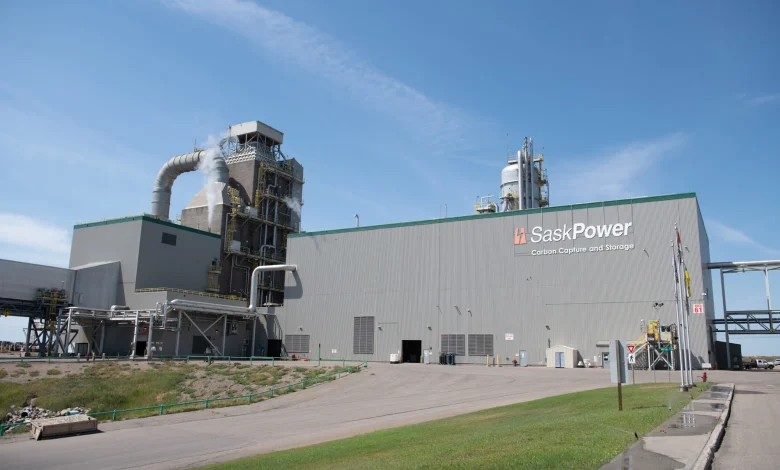
Boundary Dam Unit 3’s integrated carbon capture and storage project has become a tangible reference point in the debate. SaskPower’s October 27, 2025 blog post listed a cumulative capture of 7, 095, 042 tonnes of CO2 in the first 11 years of operation, a mark well short of the 11 million tonnes that initial projections suggested. The same post highlighted a recent improvement: the CCS facility captured 236, 512 tonnes of CO2 in the third quarter of 2025, the project’s second-best quarter to date, after a major workover earlier that year.
Those numbers matter because they were central to long-running friction between SaskPower and the contractor that built the unit. SNC-Lavalin, identified as the engineering, procurement and construction contractor for Boundary Dam Unit 3, faced early teething problems, redesigns and equipment replacements. That troubled performance led to litigation between SaskPower and SNC-Lavalin/AtkinsRéalis that lasted for the better part of a decade.
Who is speaking up and what happens next?
Voices in this conversation come from different angles. Brian Zinchuk, editor and owner of a pipeline-focused publication, framed the local view bluntly: “And there’s an elephant in the room from Saskatchewan, here, being I’m from Estevan. SNC-Lavalin was the EPC that built the Boundary Dam Carbon Capture unit… while it does work, absolutely does work, it has never performed the spec it was supposed to. ” His account underlines how technical setbacks translate into long-term distrust in procurement and contractor performance.
On the environmental front, Peter Prebble, director of the Saskatchewan Environmental Society, expressed a sharp critique of the government’s direction: “In terms of climate change, Saskatchewan’s taking a real irresponsible position. ” That position frames nuclear as a choice that could redirect public funds away from alternatives and raises questions about waste and local risk management.
Industry voices have also taken the floor. Carl Marcotte, senior vice-president, Marketing & Business Development at CANDU Energy, participated in public discussion about why Saskatchewan might consider a CANDU reactor. His engagement marks a clear push from a vendor that sees a business case in the province’s procurement process.
Operationally and politically, the selection process that Minister Harrison set in motion will determine whether SaskPower pursues one large-reactor path or another set of options. The Boundary Dam record and the decade-long litigation loom over that choice, shaping how officials, contractors and communities measure risk and accountability.
Back on the Estevan street, the retired operator folds his jacket against the wind and repeats the name saskpower with a mix of hope and wariness. The town waits for more detail on technology selection, contractor oversight and community safeguards — and for answers that build trust rather than reopen old grievances.