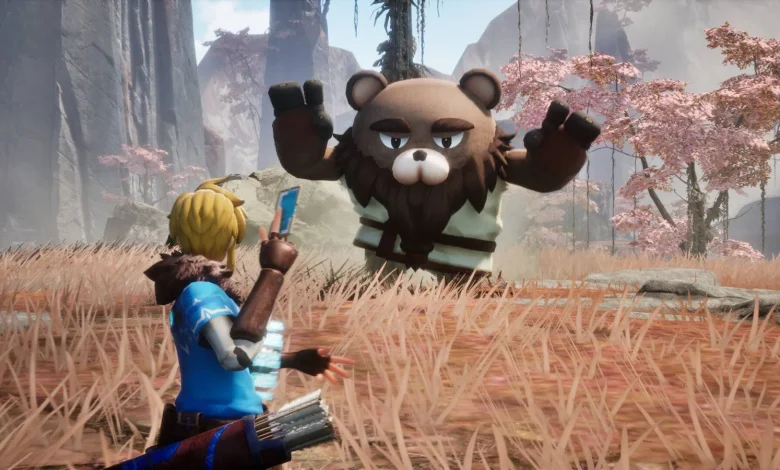
The pickmon game surfaced as a brash mashup that leans openly on the visual and mechanical vocabulary of major franchises. Presented as a “multiplayer open-world survival crafter, ” the title promises players will “dive into a vast, uncharted continent filled with ancient civilizations and mysterious creatures called ‘Pickmon. ‘” Its Steam presence mixes monster-taming with industrial empire-building and a card-based taming twist, and the trailer brazenly echoes designs associated with other high-profile games.
Pickmon Game: Background and Context
The project is attributed to developer PocketGame and publisher NETWORKGO, the latter previously responsible for the obscure fantasy title Hainya World. The public listing frames Pickmon Game as a survival crafting experience in which players will team up with creatures to fight enemies, gather resources, farm land, and build “industrial empires. ” The developers also describe a mechanic where cards are used to tame creatures — a notable divergence from traditional monster-capture tropes.
Deep analysis and legal stakes
At surface level, creative borrowing in game design is nothing new, but Pickmon Game presents a concentrated convergence of recognizable elements: creature designs that recall established monster franchises, player avatars and environment cues evocative of a certain open-world sword-and-shield lineage, and a trailer moment that includes a figure resembling an Overwatch character. The inclusion of a Roadhog-like image has prompted commentary over intellectual property overlap from other developers’ catalogs.
The legal context that frames how long the pickmon game may remain available is already active. Nintendo has been aggressive in protecting its intellectual property, pursuing a lawsuit against a studio behind a similar monster-taming title; that lawsuit was filed in November 2024. Patent friction intensified in November 2025 when Japanese authorities rejected one of Nintendo’s patent attempts related to monster-capture mechanics, followed weeks later by the U. S. Patent and Trademark Office taking the unusual step of re-examining a previously granted patent. Separately, Nintendo has brought action in the United States Court of International Trade challenging tariffs imposed under executive orders from President Donald Trump, arguing those duties — implemented under the International Emergency Economic Powers Act — were unlawful and seeking refunds with interest.
These parallel legal fronts matter because they show a company simultaneously defending patents, trademarks and trade positions. Historically, Nintendo has been selective in its outcomes: it has won some contests but lost others, such as a recent trademark defense victory by a grocery store in Costa Rica. That mixed track record informs expectations for how vigorously a rights holder will pursue remedies against projects like Pickmon Game and whether enforcement resources will be allocated amid other high-profile litigation and trade disputes.
Regional and global impact and a forward look
If Pickmon Game gains traction on digital storefronts, the immediate ripple will be reputational and commercial: developers and distributors will reassess exposure to potential takedowns or preemptive legal complaints. The entanglement of patents, copyright-like design claims, and trade litigation illustrates a broader, industry-level tension over how derivative works are policed when multiple jurisdictions and enforcement mechanisms are in play.
From a marketplace perspective, the listing highlights how competitive pressures and attention seek to capitalize on recognizable gameplay formulas. The trailer’s mash of established aesthetics—combined with mechanics like card-based taming—creates a product that invites scrutiny from rights holders and attention from players who track knockoffs. At the same time, the decision by PocketGame and NETWORKGO to publish a trailer ahead of an announced release date signals a willingness to court controversy as a promotional strategy.
How platform operators and legal authorities respond will be determinative. Will the pickmon game be treated as a creative violation worth immediate removal, or will platforms and courts require a higher threshold to act? Given the existing lawsuits, patent re-examination, and trade litigation involving major industry players, that judgment will unfold across multiple venues and could set practical precedents for similar mashups in the future.
Ultimately, the Pickmon Game episode raises a forward-looking question for creators and rights holders alike: at what point does homage cross into enforceable infringement, and how will courts and marketplaces draw that line as design borrowing becomes ever more audacious?