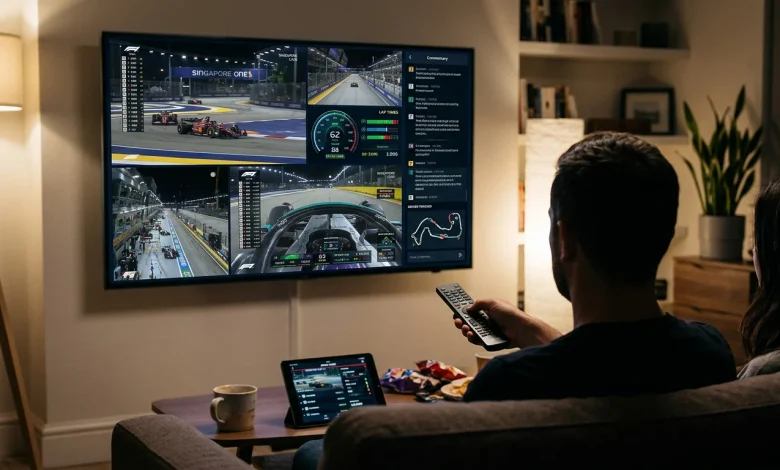
Sky Sports has launched an interactive race-control suite for the 2026 Formula 1 season that lets viewers control multiple feeds, driver data and on-board cameras; f1tv has been referenced in headline coverage of broadcast changes. The new features embed a granular “Command Center” into Sky Glass, Sky Stream and Sky Q and have prompted fresh discussion about data usage and access in markets with constrained digital infrastructure.
What Sky Sports’ Interactive Race Control Does
The core offering is an immersive sidebar that appears automatically during race weekends on Sky’s platforms. Instead of a single director-chosen feed, viewers can pull up a Command Center with driver-specific telemetry, high-definition camera angles and AI-driven insights. The package includes on-demand recaps and simultaneous overlays designed to let the audience act more like an active race engineer than a passive viewer.
The launch aims to maintain engagement by personalizing coverage across practice, qualifying and race sessions. Industry analysts at Deloitte suggest the transition from a “one-to-many” broadcast model to a “bespoke data” model is a primary strategy for sports rights holders in 2026, and Sky Sports’ suite is presented as a practical step in that direction.
F1tv And Presenter Line-Ups
Recent headlines have also spotlighted presenter changes across F1 coverage, listing a full 2026 commentator and presenter line-up that includes named presenters on both Sky Sports and F1 TV. The convergence of presenter announcements and the rollout of interactive tools frames a broader push to redefine how Formula 1 is packaged and consumed across platforms; f1tv is referenced in that coverage alongside Sky’s new features.
The combination of refreshed on-air talent and deeper technical control in the living room signals an industry effort to make broadcasts feel more immediate and participatory during periods of low on-track action, such as safety-car stretches or long runs of process-driven racing.
Data Costs, Accessibility and Regional Impact
The increased technical ambition comes with a notable data burden. A standard two-hour 1080p broadcast can use between 3GB and 5GB of data in Kenya, and the interactive overlays require concurrent high-bitrate streams that push usage significantly higher. Factoring in practice, qualifying and the race itself, a single Grand Prix weekend could consume upwards of 15GB of data.
For households on home fiber the consumption is manageable, but for large portions of the population that rely on mobile data bundles—particularly in Nairobi and Mombasa—the cost of engaging with these features places the experience in the realm of a premium luxury. That discrepancy risks widening the gap between digitally native, high-bandwidth audiences and mobile-first fans across the region.
Beyond individual bills, the rollout highlights persistent strain on digital infrastructure across the continent. High-definition, multi-overlay streaming depends on robust, consistent bandwidth; where that is absent, the new interactive format may be inaccessible or prohibitively expensive for many viewers.
Sky Sports’ interactive suite and the parallel focus on presenter line-ups mark a clear push to retain and deepen fan engagement during the 2026 Formula 1 season. The immediate consequence is a sharper conversation about who can take part in the new, data-rich viewing experience and whether infrastructure and pricing will keep pace with broadcasters’ technical ambitions.
The development will likely remain a central talking point as the season progresses and as broadcasters measure uptake against the technical and economic realities of different markets.