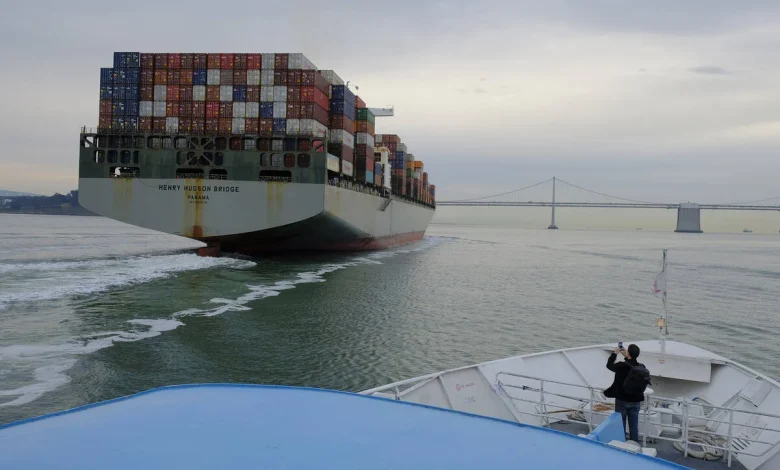
President Donald Trump has floated a temporary suspension of the jones act, a confirmed move now paired with an editorial call for repeal or reform. That development signals a visible direction: elected officials and pending legislation in Congress are pushing the law toward either short-term waiver use or longer-term statutory change.
President Donald Trump’s temporary waiver talk and the 1920 Jones Act
Mr. Trump in recent days has floated a temporary suspension of the 1920 Jones Act, and an editorial argues the law should be reformed or repealed. The law requires that shipping between U. S. ports be handled by American-owned vessels built and flagged in the United States and staffed with American crews, a restriction the editorial says reduces available vessels and boosts costs. Joe Lancaster of Reason magazine noted that oil pumped in Alaska can only be transported to the U. S. mainland by a small subset of available vessels, and the editorial points out Hawaii gets virtually all of its oil from foreign sources because domestic transport costs are prohibitive. For context on capacity, the Cato Institute notes the number of ocean-going ships that meet Jones Act requirements declined from 193 to 92.
Energy pressure from the Iran war and the Strait of Hormuz disruptions
Energy markets are under pressure after the Iran war has disrupted shipping through the Strait of Hormuz, and gasoline prices remain elevated even though oil now sits well below the $120 a barrel it briefly hit Monday. The editorial states the United States produces enough energy to meet domestic demand, yet global market mechanics mean cuts in production push prices up. These disruptions present political issues for the White House as the midterms approach, with higher gasoline prices raising transportation costs and potentially increasing the cost of goods.
Scenario A: If President Donald Trump’s suspension push continues — short-term waiver effects
If Mr. Trump continues to push for a temporary waiver, the immediate effect would be narrower: a short-term suspension could open shipping options for moving domestically produced fuel between U. S. ports. The editorial frames a temporary suspension as the president’s most promising avenue to try to tame gasoline prices, and it presents suspension as distinct from full repeal. Legislation pending in Congress would pursue a different path by making the law far less restrictive; either route would, the editorial says, ease shipping constraints that currently raise costs.
Scenario B: Should Congress enact reform or repeal — structural shipping and cost signals
Should Congress pass a reform bill that makes the law far less restrictive or repeal it, the editorial suggests longer-term structural change could increase the pool of vessels eligible to move domestic energy, lowering transport costs over time. The Cato Institute’s cited figures, showing a decline in qualifying ocean-going ships from 193 to 92, underline the editorial’s claim that the law no longer ensures a robust domestic shipbuilding base. If reform occurs, the Reason magazine observation about Alaska’s limited shipping options and Hawaii’s reliance on foreign oil become test cases for how much domestic transport costs could fall.
| Item | Context detail |
|---|---|
| Law origin | 1920 Jones Act |
| Ocean-going ships meeting requirements | Declined from 193 to 92 |
| Oil price signal | Briefly hit $120 a barrel Monday; now below $120 |
The next confirmed milestone in this story is congressional action on the pending legislation that would reform the law. What the context does not resolve is whether a temporary suspension will be implemented and, if so, how long it would last or whether Congress will move to enact substantive reform or repeal. For now, the immediate trajectory visible in the context points to short-term waiver talk backed by simultaneous pressure for statutory change in Congress.