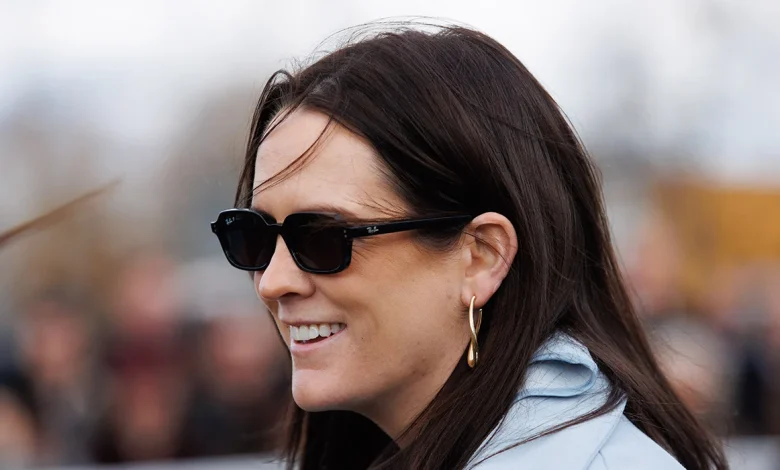
Fresh from retirement and now expecting her first child, rachel blackmore reappeared at Cheltenham in civilian attire, debuting her baby bump from the stands. The former jockey’s visibility at the Festival, paired with her new ambassadorial role, signals a pivot from competitive riding to shaping racegoer experience—especially for women—at one of jump racing’s marquee weeks.
Rachel Blackmore at Cheltenham: from weighing room icon to Head of Ladies Day
Last May, Rachel Blackmore stepped away from the saddle after a record-breaking career that included becoming the first woman to win the Grand National in 2021 and the Cheltenham Gold Cup in 2022. Just 12 months ago, she landed a day three double at Prestbury Park with Air Of Entitlement and Bob Olinger, the latter in the Stayers’ Hurdle to complete a full set of championship races. This week, she watched the action wrapped in a brown jumper, black shades, and a blue trench coat—her bump partially covered—while fans still sought photos.
That presentation underscores a new chapter already in motion. She has taken on an ambassadorial role with Cheltenham Racecourse and the Jockey Club as Head of Ladies Day at The Festival, a brief centered on meeting racegoers, understanding why people attend, and learning what deters their peers—particularly women—from joining them. Her stated aim is to help show why a day at the races can be social, welcoming, and memorable.
The shift is also personal. Earlier this year, she signaled the pregnancy by sharing a photo of a buggy box in the boot of her Volvo XC60 with the line, “Boot contents looking a little bit different now. ” Asked to compare Cheltenham riding nerves with the thought of giving birth, she said riding was the more nerve-racking experience. The remark, paired with her public appearance at the course, helps normalize a dual identity as both trailblazing athlete and soon-to-be parent.
This is a contrast to the intensity she has described inside the weighing room—an environment she called tight-knit, competitive, and often under pressure during Festival week—highlighting the significance of her presence now on the spectator side of the rails.
Ryanair and JP McManus frame a stable platform at Prestbury Park
While Rachel Blackmore advances fan-facing goals, industry continuity was on show around her. Ryanair CEO Michael O’Leary was spotted trackside, a reminder of the airline’s long-standing partnership with Cheltenham. In 2026, the Ryanair Chase will reach its 20th sponsorship year, a marker of sustained corporate support that can underpin initiatives aimed at broadening attendance and deepening engagement.
JP McManus, celebrating his 75th birthday, added further sheen to the opening day narrative with winners including Saratoga in the McCoy Contractors Juvenile Handicap Hurdle and Johnnywho in the Trustmarque Ultima Handicap Chase at 18/1. These results, set against the presence of major backers and owners, show a Festival stage that blends tradition and profile—conditions that can help an ambassador program gain traction with new or lapsed racegoers.
For rachel blackmore, the confluence is timely. A high-profile former rider working to understand what draws attendees—and what blocks their friends from coming—has a ready-made arena, supported by recognizable sponsors and owners whose participation keeps attention fixed on Cheltenham.
Cheltenham Festival trajectory under Rachel Blackmore: engagement and access for women
Direction of travel is clear in the stated brief: engage more women and illuminate what makes a day at the races special. Her presence at Cheltenham, as a retired champion and expectant mother, anchors a narrative that the sport can be both elite and accessible. Yet, the most decisive signals will come from how her insights translate into tangible changes for attendees.
If her Head of Ladies Day outreach continues as outlined—meeting racegoers and identifying barriers—the Festival is positioned to refine its offering around social connection and inclusivity. That could mean tailoring parts of the race day experience to what women highlight as motivators or friction points, an approach directly supported by her emphasis on understanding both why people attend and why others hesitate.
Should early parenthood shift her public availability after the baby’s arrival, momentum could move in stages, with Cheltenham and the Jockey Club teams progressing her engagement agenda between her appearances. The context supports this possibility: she is expecting her first child and has framed riding, not childbirth, as the more nerve-racking prospect, indicating a confident but evolving personal timetable.
Alternatively, if long-standing sponsorships such as the Ryanair Chase continue toward the 2026 milestone, that stability can give her ambassador work a durable platform. Corporate continuity often equates to consistent messaging opportunities and resources—factors that bolster, rather than define, how far an engagement strategy can reach.
The next hard signal will be feedback from this Festival’s racegoers and whether her Head of Ladies Day remit surfaces specific blockers and opportunities. What the context does not resolve is the precise set of measures Cheltenham will implement from that research. The presence of major owners, ongoing sponsorship strength, and Rachel Blackmore’s evolving role all point toward a sustained push to make the experience more inviting—especially for women—so long as those insights can be converted into action at the course.