Little Foot Digital Reconstruction Published; Species Assignment and Deformation Limits Remain Unresolved

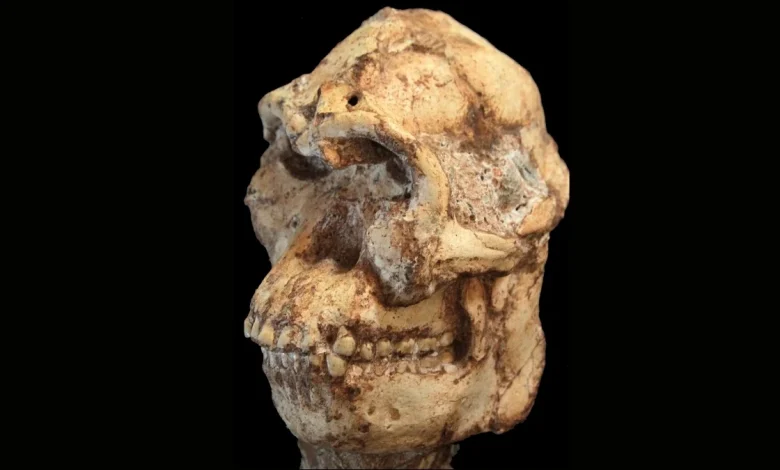
Sunday at 9: 00 a. m. ET: CONFIRMED — Researchers led by Amélie Beaudet have published a little foot digital reconstruction that assembles the face of the 3. 67-million-year-old Australopithecus specimen nicknamed “Little Foot. ” UNCONFIRMED — the precise species assignment and the full extent of deformation correction remain unresolved as of 9: 00 a. m. ET.
Amélie Beaudet’s Reconstruction Method and Confirmed Findings
CONFIRMED: The team led by Amélie Beaudet used X-ray micro-CT scans at the Diamond Light Source to produce a high-resolution 3D model with a voxel resolution of 21 micrometers. The researchers virtually separated bones and teeth from surrounding rock, divided the crushed skull into five movable blocks and reassembled them in the digital model to approximate the original shape.
Still, CONFIRMED: the published reconstruction shows a facial form that the study authors measured and compared with other specimens. The analysis included comparisons with Australopithecus skulls and modern human, gorilla, chimpanzee and orangutan skulls, and the reconstructed face falls between the size of a gorilla and an orangutan in the published work.
Little Foot Digital Reconstruction: Remaining Species Questions and Deformation Limits
UNCONFIRMED — species attribution: Experts have not settled which species Little Foot belongs to as of 9: 00 a. m. ET. The published study notes that the specimen is generally attributed to Australopithecus but that the squashed, fractured skull complicates precise assignment; the authors state the fossil might represent an as-yet-unnamed species.
That said, UNCONFIRMED — reconstruction limits: the researchers describe their own reconstruction as “preliminary and could likely be refined in the future, ” and they acknowledge some deformations could not be corrected in the current 3D assembly. The long history of geological pressure on the skull and the potential for significant male–female differences within species are cited as factors muddying attribution.
What Published Comparisons with Australopithecus and Apes Reveal Next
CONFIRMED: The study’s comparative analysis found that, despite Little Foot being recovered from Sterkfontein Cave in southern Africa, the size and overall skull shape share more in common with Australopithecus specimens from eastern Africa. CONFIRMED: the orbital regions (eye sockets) appear distinctly shaped relative to other specimens, a feature the authors highlight as potentially informative about evolutionary pressures.
Yet, the authors explicitly write that evolutionary interpretations tied to the orbital differences are tentative. The team links the distinct orbital morphology to possible ecological pressures affecting visual capacities, but they stop short of firm conclusions and stress additional work is needed to test such hypotheses.
For now, the concrete triggers that will clarify the picture are clear: further refinements to the 3D model that correct remaining deformations, additional comparative measurements from other Australopithecus specimens, and publication of follow-up analyses. Each of those outcomes is specifically named in the study as necessary to strengthen species-level assignments and functional interpretations.
CONFIRMED: The fossil’s discovery history is also documented in the published research — Little Foot was first traced by four small ankle bones recovered in 1980, the remainder of the skeleton was found embedded in the cave wall in the 1990s, and extraction from the surrounding rock required about 15 years of careful work.
EXPECTED: The published paper appears in the journal Comptes Rendus Palevol. The authors note that the reconstruction could be refined in subsequent work, which the team frames as the most direct path to resolving outstanding questions about species identity and the functional meaning of orbital shape.
CONDITIONAL: If the preliminary deformations identified in the current reconstruction are corrected in a revised digital model, a clearer species assignment is expected by the time a revised reconstruction is published.