Military Commanders Framing Iran Strikes as Prelude to Armageddon, Troops File Dozens of Complaints


U. S. military personnel across the Middle East have filed a surge of grievances after commanders reportedly presented the recent strikes on Iran as biblically sanctioned and tied to armageddon, raising questions about religious proselytizing and unit cohesion during active combat operations.
Armageddon referenced in briefings, multiple complaints allege
In the days after U. S. forces joined Israel in striking Iran early Saturday morning, a military religious freedom group was inundated with more than 110 grievances from service members stationed at dozens of sites across the region. Complaints include accounts from noncommissioned officers who say commanders urged them to tell troops the campaign was “all part of God’s divine plan, ” citing passages from the Book of Revelation and referencing Armageddon and the imminent return of Jesus Christ.
One complaint was lodged on behalf of 15 troops—11 Christians, one Muslim and one Jew—whose representative argued that such religious framing damaged morale and unit cohesion and violated constitutional oaths. The same complaint described a commander opening a combat readiness briefing by assuring troops they should not be afraid of ongoing combat operations and connecting those operations to divine sanction.
Scale of complaints and internal dynamics
The wave of grievances came from dozens of units across numerous installations, spanning multiple branches of the U. S. military. The religious freedom group said it had been overwhelmed by the volume and similarity of the reports, noting common claims that commanders expressed exuberance about the war as an End Times event.
Several complaints characterized commanders’ attitudes as more than rhetorical, alleging an “unrestricted euphoria” in command chains about how the current conflict aligns with a fundamentalist interpretation of end-times eschatology. Some complainants described commanders as fixated on how graphic and bloody the battle should be to match that eschatological narrative.
Pentagon leadership and visible religious signaling
Those raising concerns pointed to signals from senior defense leadership that have normalized overt expressions of Christian nationalism inside military settings. The defense chief has been described as having repeatedly invoked God and Christian-nationalist language, implementing regular prayer services at military headquarters and visibly bearing Christian symbols such as a Jerusalem cross and the phrase “Deus vult. “
Complaints tie those broader patterns to on-the-ground briefings where commanders framed the Iran strikes in religious terms. For service members who do not share that faith framing, the effect cited in grievances includes erosion of trust in the chain of command and fears of coercion or marginalization within units preparing for or conducting combat operations.
Human cost and operational context
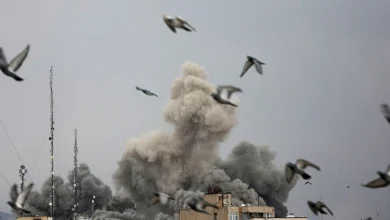
Observers noting the human toll of the campaign emphasize that the conflict has already produced severe civilian suffering: in less than a week of strikes, more than 180 schoolgirls and staffers were killed in a single massacre, several hospitals were struck, and numerous other attacks on civilians were recorded. At the same time that these battlefield and humanitarian consequences are unfolding, multiple military complaints claim commanders are framing the violence as necessary to bring about a biblical end of days.
Critics within the ranks argue that religious framing in active operations complicates adherence to constitutional protections for service members and undermines the military’s stated commitment to religious liberty and neutrality. The influx of grievances marks a flashpoint between commanders’ public expressions and the rights and welfare of service members tasked with carrying out orders under extremely fraught conditions.
What comes next
The complaints have prompted heightened attention to how religious rhetoric is used within briefings and command messages during wartime. The volume and uniformity of the grievances suggest internal frictions that could affect morale and cohesion if unaddressed while combat operations continue. Recent updates indicate details may evolve as the military and oversight groups respond to the surge of allegations.