Risk, renewal, and the narrow line: Cody Garbrandt reaches UFC 326 with questions to answer and a back-to-basics plan

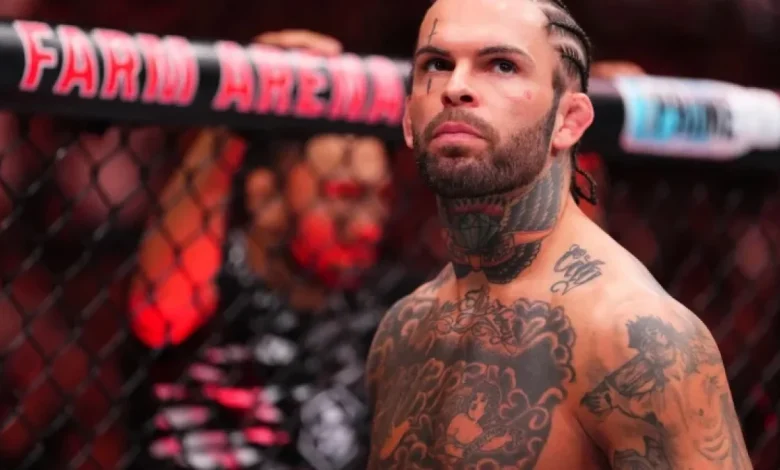
For cody garbrandt, UFC 326 isn’t just another booking; it’s a stress test of health, fundamentals, and public belief. The former bantamweight champion arrives in Las Vegas saying vertigo that complicated recent outings has been managed and that a return to core wrestling-and-boxing work has restored anticipation for fight night. Odds still shade him as a slight underdog, which tells you how fragile the confidence picture remains—and how much a clean performance could recalibrate it.
Why risk still defines Cody Garbrandt at UFC 326
Here’s the part that matters: the gap between a rejuvenation story and more turbulence is razor-thin. Garbrandt has framed this camp as a reset built on basics—wrestling to control positions, boxing to set traps—and on feeling healthy throughout the process. That’s a deliberate answer to a 3-7 run since losing his title at UFC 217, a stretch complicated by vertigo that followed a defeat to Deiveson Figueiredo at UFC 300 and resurfaced in a recent loss to Raoni Barcelos.
It’s easy to overlook, but the betting board listing him at +135 underscores how the marketplace views this as a coin-flip tilt with a nudge against him. Being priced narrowly is not a dismissal; it’s a statement that small edges—pace management, pocket defense, or early wrestling success—could tip everything. If the health narrative holds and the fundamentals stick under pressure, cody garbrandt’s margin widens. If not, the odds may have been generous.
Across the cage, Xiao Long treats the assignment as a profile-maker. His ledger is listed at 27-10 overall with a 1-2 mark in the promotion, and he has flagged inaccuracies in the way some bouts are recorded. Even so, he leans on a body of experience that includes recent work against grapplers and a multi-year climb through the Road to the promotion. The real question now is whether that seasoning travels in a high-stakes showcase against a former champion.
Inside the matchup: what changes if the basics hold
Set for March 7, 2026, at T-Mobile Arena in Las Vegas, the bout is slotted as a featured prelim, positioning it as a high-visibility measuring stick. Garbrandt’s emphasis on wrestling-and-boxing doesn’t just nod to his origins; it also simplifies decision-making. Wrestling attempts can quiet chaos; clean boxing entries can limit counters. Both are useful if you’re guarding against any ripple of dizziness or rhythm loss under the lights.
Garbrandt has publicly recognized Long’s threat profile, characterizing him as a dangerous, intent-driven opponent. Long’s own framing is equally clear: the matchup is a chance to announce himself on U. S. soil against a name who still draws attention. On paper, their trajectories intersect at stakes, not comfort—one fighter testing a rebuild, the other chasing recognition.
There’s a brief rewind worth noting. Since UFC 217, uneven results and health interruptions have clouded Garbrandt’s ceiling. He now arrives at UFC 326 describing the first truly energizing camp he’s felt in a while. That’s the thesis. Execution is the proof.
Telltales that could swing UFC 326
- First clinch and mat sequence: Early wrestling from Garbrandt would signal that the back-to-basics plan is more than a talking point.
- Pocket discipline: Fewer wild exchanges, more structured boxing combinations would indicate the reset is sticking.
- Long’s composure round-to-round: If Xiao Long keeps a steady output without giving up position, his experience talk carries weight.
- Live odds movement: With Garbrandt entering around +135, any sharp in-fight shift toward him suggests tangible control rather than narrative hope.
- Recovery moments: How each fighter responds to being tagged will reveal as much as any single burst of offense.
One more layer: Long’s record (27-10 overall, 1-2 in the promotion) coexists with his acknowledgment that some listed bouts don’t reflect his core professional slate. Whether you treat those edge cases as résumé padding or additional seasoning, it creates a scouting ambiguity—less certainty on tape, more need to feel him out early.
The bigger signal here is how deliberately both teams talk about fundamentals and preparation. That’s usually the language you hear when risk tolerance is low and the path to victory is narrow. If the bout plays out inside that lane—measured engagements, selective wrestling, smart resets—the former champion’s plan gets a fair reading. If it scrambles into chaos, Long’s bid for a breakout might find the space it needs.