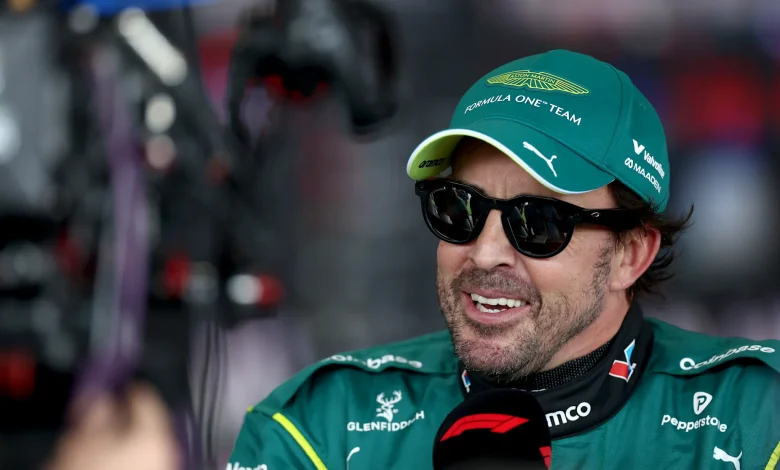
Drivers, crew and Aston Martin’s race weekend face immediate disruption as both cars risk being unable to start the Australian Grand Prix, threatening driver safety and team participation; lawrence stroll finds his team under pressure Friday at 5: 05 p. m. ET after persistent Honda power unit vibrations and a dwindling supply of batteries left the squad perilously short.
Fernando Alonso and Lance Stroll confront safety and race-start risks
Fernando Alonso and Lance Stroll are the most directly affected: extreme vibrations from Honda’s power unit have raised warnings that the forces transmitted to the chassis could cause permanent nerve damage for both drivers. Alonso qualified P17 and nearly reached Q2, signaling improved performance, while Lance Stroll missed qualifying after a suspected internal combustion engine issue in FP3 prevented the team from rebuilding his car in time.
Lawrence Stroll and Honda’s battery shortfall leaves no spares
The team’s ability to start and finish the 58-lap race is constrained by a battery shortage in Honda’s hybrid system. As of Friday, Aston Martin was down to its last two working batteries across both cars and had no spares available; one additional battery failure in final practice, qualifying or the race would render a car unable to continue for the remainder of the weekend. Team management warned that fresh supplies are not currently available from Honda’s factory.
Adrian Newey on countermeasures and what qualifying revealed
Adrian Newey acknowledged the vibration problem and described a recent “fresh” battery communication failure that led to discarding two more units, compounding the shortage. Honda engineered a countermeasure on a dynamometer in Japan and the team used Friday’s running to test that fix. With Lance Stroll and Fernando Alonso completing a combined 31 laps in practice, the team gathered data indicating the items implemented at HRC Sakura are working at the track, but the overall prognosis remains fragile.
Alonso, who missed FP1 with a suspected power unit fault and then recovered through FP2 and FP3, noted the value of track time: his running reduced the gap to the leaders from roughly 4. 5 seconds to about 2. 5 seconds between sessions. He urged caution on component use, saying the team must monitor systems closely and stop running at the first sign of trouble to preserve parts for the next race. That limited running was a direct factor in the apparent step forward in qualifying pace.
Still, the vibration issue predates Australia. Pre-season testing in Barcelona and Bahrain was severely restricted, with limited mileage blamed on the same susceptibility of batteries to vibration from other parts of the power unit. With no clear source solution, priority shifted to protecting the battery so the car could at least attempt to complete a race distance in Melbourne.
Team engineering managed to implement countermeasures and collect relevant data in practice, and second practice produced usable laps. Yet the combination of suspected internal combustion engine damage to Lance Stroll’s car and the narrow spare inventory means the weekend’s outlook remains precarious: failure of another battery or emergence of a new fault could force one or both cars out of the event.
For now, the immediate change at stake is whether Aston Martin can assemble two cars capable of starting Sunday’s race, or whether the battery and vibration problems will force partial or full withdrawal — a development that would remove both drivers from competition and limit crucial on-track development time ahead of the next round.
If the dyno-engineered countermeasures continue to hold during the remaining sessions, both cars are expected to be fit to start Sunday’s 58-lap race.